

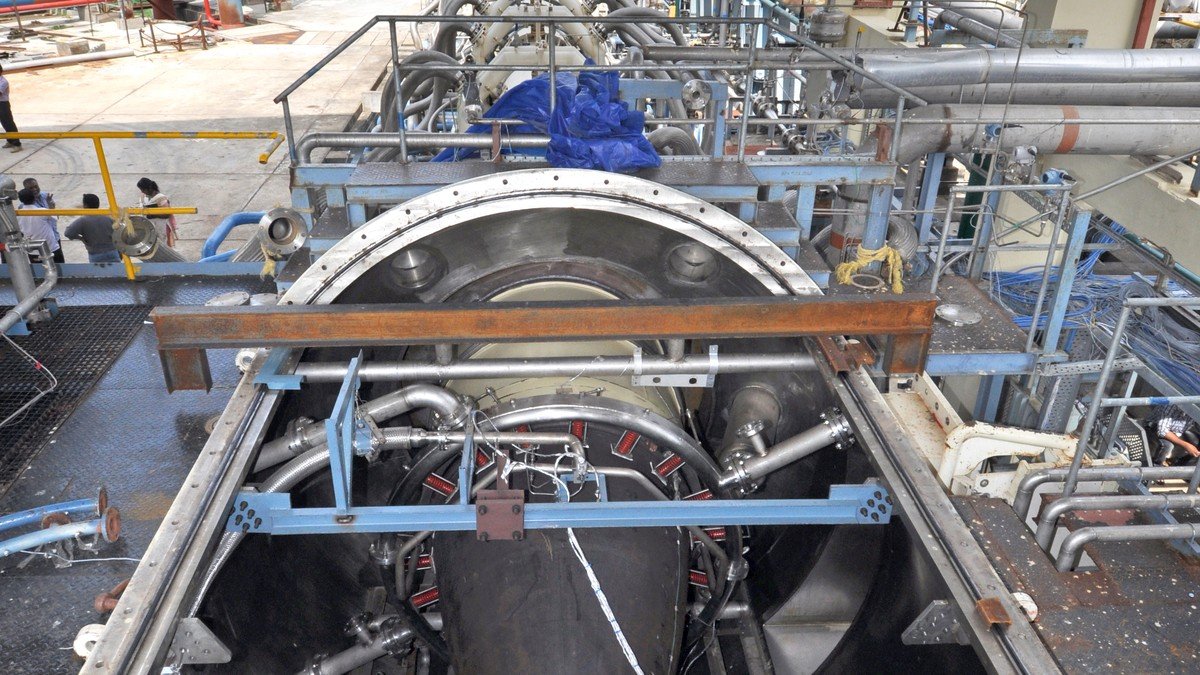
The Indian Space Research Organisation (ISRO) announced on Tuesday that it has successfully completed the rigorous human-rating qualification test campaign for the indigenous CE20 cryogenic engine. Conducted at the state-of-the-art High Altitude Test Facility at the ISRO Propulsion Complex (IPRC) in Mahendragiri, Tamil Nadu, the milestone formally clears the liquid oxygen and liquid hydrogen propulsion system to power astronauts into low Earth orbit aboard the Gaganyaan mission.
Human-rating is the aerospace engineering gold standard required to certify spacecraft hardware for manned spaceflight, demanding safety and reliability margins significantly more stringent than standard robotic satellite launches. Under ISRO's comprehensive testing matrix, the CE20 engine underwent four rigorous hot-fire tests under varying operating conditions, thrust levels up to 21.8 tonnes, and extreme chamber pressure dynamics.
Endurance Benchmarks and Liquid Propulsion Mastery
During the comprehensive campaign, the CE20 engine clocked a cumulative operational duration exceeding 8,810 seconds across multiple burns, far surpassing the mandatory mission burn requirement of 635 seconds per launch. The engine demonstrated immaculate structural stability, precise mixture-ratio control, and instantaneous ignition sequences under vacuum and ambient atmospheric conditions.
The CE20 engine powers the cryogenic upper stage (designated C25) of India's heavy-lift LVM3 (Launch Vehicle Mark-3) rocket. Responsible for the final orbital injection phase, the upper stage delivers the critical delta-v required to place the 5.3-tonne Gaganyaan Orbital Module—housing the crew module and service module—into a circular 400-kilometer low Earth orbit.
“The successful human-rating of the CE20 engine is a major leap forward for Gaganyaan. It assures us of the highest propulsion reliability as we prepare to launch our brave astronauts to space.”
Crucial Milestone Toward India's Maiden Astronaut Launch
ISRO Chairman S. Somanath praised the propulsion teams and engineers across the Liquid Propulsion Systems Centre (LPSC) and IPRC, emphasizing that mastering indigenous cryogenic propulsion with human-rating certification cements India among an elite group of spacefaring nations possessing domestic manned spaceflight capabilities.
With the CE20 engine now fully human-rated, ISRO is advancing preparations for upcoming uncrewed Gaganyaan test flights (G1 and G2) featuring the Vyommitra humanoid robot, designed to validate atmospheric re-entry, life-support electronics, and oceanic recovery protocols ahead of the historic crewed launch.

Comments (0)
Log in to join the discussion.