

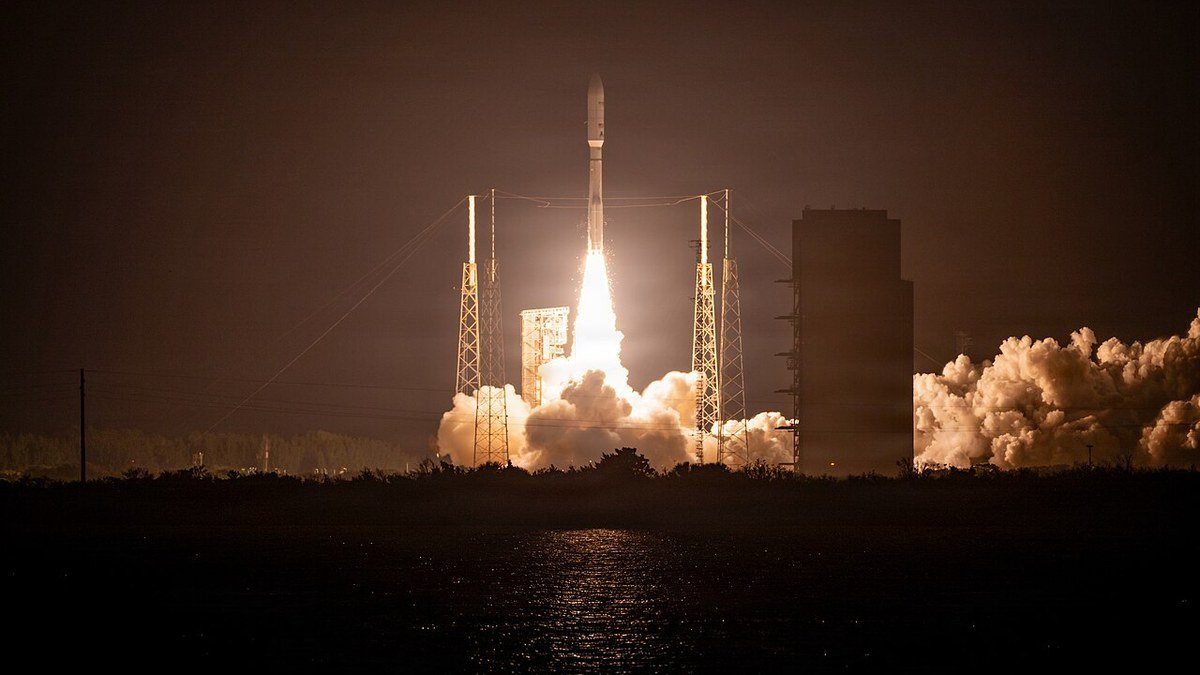
United Launch Alliance (ULA) achieved a major milestone in American spaceflight early Friday, successfully launching its next-generation Vulcan Centaur heavy rocket from Space Launch Complex 41 at Cape Canaveral Space Force Station.
The Cert-2 mission, which lifted off at 7:25 a.m. EDT into clear Florida skies, carried an inert mass simulator and advanced avionics flight experiments designed to satisfy U.S. Space Force National Security Space Launch certification criteria.
Bullseye Orbital Insertion Paves Way for Military Space Certification
Approximately 37 seconds after liftoff, an observable anomaly occurred on the nozzle of one of the two Northrop Grumman GEM-63XL solid rocket boosters, sending visible debris outward into the exhaust plume.
Despite the booster issue, Vulcan's dual Blue Origin BE-4 main engines burned slightly longer than planned, and the Centaur V upper stage executed two flawless RL10 engine burns to deliver the payload into its exact target orbit.
“Vulcan performed magnificently on its second certification flight, achieving a bullseye orbital insertion and demonstrating the robustness and precision required for the nation's most vital national security launches.” — Tory Bruno, President and CEO of United Launch Alliance
Resilient Performance Overcomes Solid Rocket Booster Anomaly
ULA President Tory Bruno praised the launch vehicle's automated guidance and control algorithms, explaining that the rocket instantly detected the slight thrust deficit and autonomously re-optimized its flight trajectory.
With two consecutive successful orbital flights completed, ULA expects the U.S. Space Force to finalize Vulcan's certification by year-end, allowing the company to begin launching high-priority classified spy satellites and military communications payloads.
Frequently Asked Questions
What was the objective of the Vulcan Centaur Cert-2 launch?
The Cert-2 mission served as the final flight required to certify Vulcan Centaur for high-priority U.S. Space Force national security missions.
Did the booster nozzle anomaly prevent orbital insertion?
No, the rocket's autonomous guidance extended main engine burns, resulting in a flawless bullseye orbital insertion.

Comments (0)
Log in to join the discussion.