


NASA and SpaceX reached a pivotal operational milestone on Thursday as the Europa Clipper spacecraft was rolled out to Launch Complex 39A at the Kennedy Space Center in Florida. Encapsulated within the protective payload fairing of a SpaceX Falcon Heavy rocket, the flagship probe is undergoing final integrated testing ahead of its historic launch to explore Jupiter's enigmatic moon Europa.
Weighing roughly 13,000 pounds fueled and spanning over 100 feet from tip to tip with its massive solar arrays deployed, Europa Clipper is the largest planetary exploration spacecraft ever constructed by the American space agency. Its scale is required to harness faint sunlight in the outer solar system and power nine sophisticated scientific instruments.
Rollout to Historic Pad Prepares Flagship for Interplanetary Voyage
The spacecraft completed its slow overnight transit from Kennedy's Payload Hazardous Servicing Facility to the historic launch complex, which previously hosted Apollo lunar voyages and Space Shuttle missions. Technicians are currently executing electrical verification, propellant loading rehearsals, and launch vehicle interface checks.
The primary objective of the multi-billion-dollar flagship mission is not to directly detect alien life, but to establish whether Europa possesses the fundamental environmental conditions necessary to sustain it. Scientists believe an ocean containing twice as much water as all of Earth's oceans combined lies hidden beneath Europa's fractured ice crust.
“Europa Clipper is the largest spacecraft NASA has ever built for a planetary mission. Moving to the pad brings us one step closer to exploring the ocean world of Europa.” — Laurie Leshin, Director of NASA's Jet Propulsion Laboratory
Investigating the Habitability of an Alien Ocean World
Over a five-and-a-half-year, 1.8-billion-mile voyage featuring gravity-assist flybys of Mars and Earth, Europa Clipper will enter Jupiter's orbit in 2030. The spacecraft will then execute nearly 50 close flybys of Europa, dipping as low as 16 miles above the frozen surface to map its composition, ice thickness, and subsurface plumes.
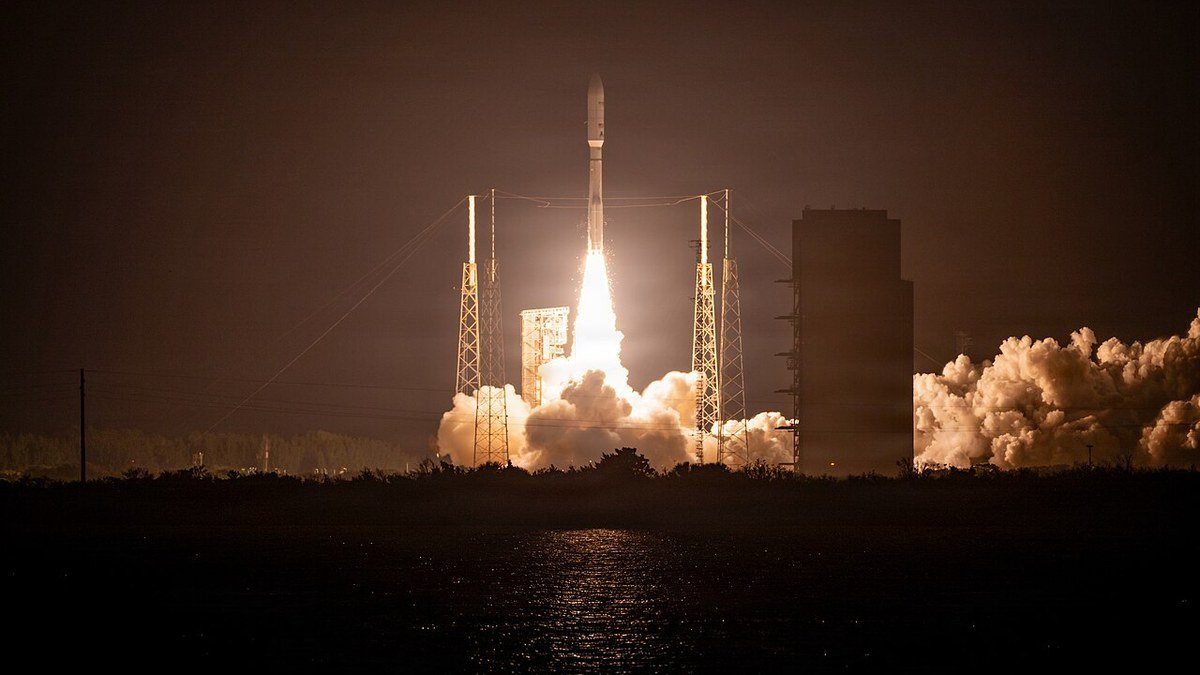
With pre-launch telemetry showing nominal health across all subsystems, launch teams are monitoring local meteorological conditions. The upcoming liftoff marks humanity's most ambitious expedition yet into the mysterious ocean worlds of our solar system.
Frequently Asked Questions
What is the mission objective of NASA's Europa Clipper?
The mission aims to determine whether the vast liquid ocean beneath Europa's icy shell has conditions suitable for life.
Which rocket is launching the Europa Clipper spacecraft?
Europa Clipper is launching aboard a SpaceX Falcon Heavy rocket from Launch Complex 39A in Florida.


Comments (0)
Log in to join the discussion.