

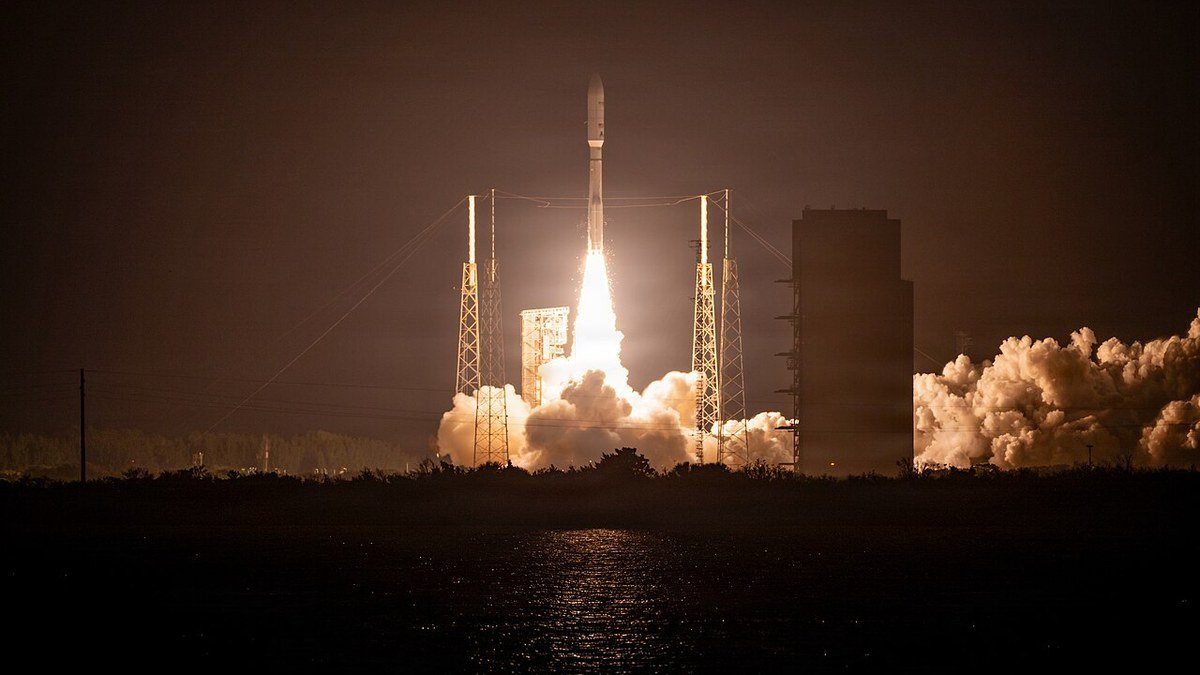
The United States Federal Aviation Administration (FAA) has granted formal regulatory clearance authorizing SpaceX to launch the European Space Agency's (ESA) Hera planetary defense spacecraft aboard a Falcon 9 rocket from Cape Canaveral Space Force Station. The targeted licensing decision allows the flagship mission to proceed toward its planetary exploration window.
The approval comes amid a broader FAA oversight inquiry into an off-nominal deorbit burn of the Falcon 9 second stage during NASA's Crew-9 mission. While the commercial fleet remains subject to review regarding controlled atmospheric disposal burns, regulators determined that Hera's unique mission profile presented no hazard to public safety.
Targeted Exemption Granted for Interplanetary Trajectory
Because Hera is destined for the Didymos binary asteroid system millions of kilometers away, the Falcon 9 upper stage will consume all remaining propellant during deep-space orbital injection. It will not perform a controlled deorbit burn into Earth's atmosphere, entirely bypassing the anomaly under investigation by federal aerospace authorities.
Missing the narrow October launch window would have forced European planetary scientists to delay the mission by more than two years, entailing significant financial penalties and logistical disruption. With the FAA launch license formally secured, ground crews at Launch Complex 40 are completing final launch countdown procedures.
“The FAA evaluated the Hera mission profile and determined that expendable deep-space upper stage operations present no risk to the public, clearing this vital European planetary defense mission for flight.” — Federal Aviation Administration Commercial Space Transportation Office
Investigating the Aftermath of NASA's Kinetic Impact Test
Hera represents Europe's core contribution to an international planetary defense initiative. The spacecraft will rendezvous with the Didymos asteroid and its tiny moonlet Dimorphos in late 2026 to conduct a forensic post-impact survey following NASA's historic Double Asteroid Redirection Test (DART) kinetic deflection in September 2022.
Equipped with advanced optical instruments, thermal imagers, and two deployable CubeSats named Juventas and Milani, Hera will measure the precise mass, structural integrity, and crater dimensions of Dimorphos. The resulting data will transform kinetic impact from a scientific demonstration into an operational planetary shield for humanity.
Frequently Asked Questions
Why did the FAA grant an exception for SpaceX to launch Hera?
Hera's Falcon 9 upper stage will be expended into interplanetary space rather than attempting an atmospheric re-entry burn.
What is the primary scientific objective of the ESA Hera mission?
Hera will rendezvous with the Didymos asteroid system to conduct detailed assessments of NASA's 2022 DART kinetic impact.

Comments (0)
Log in to join the discussion.