

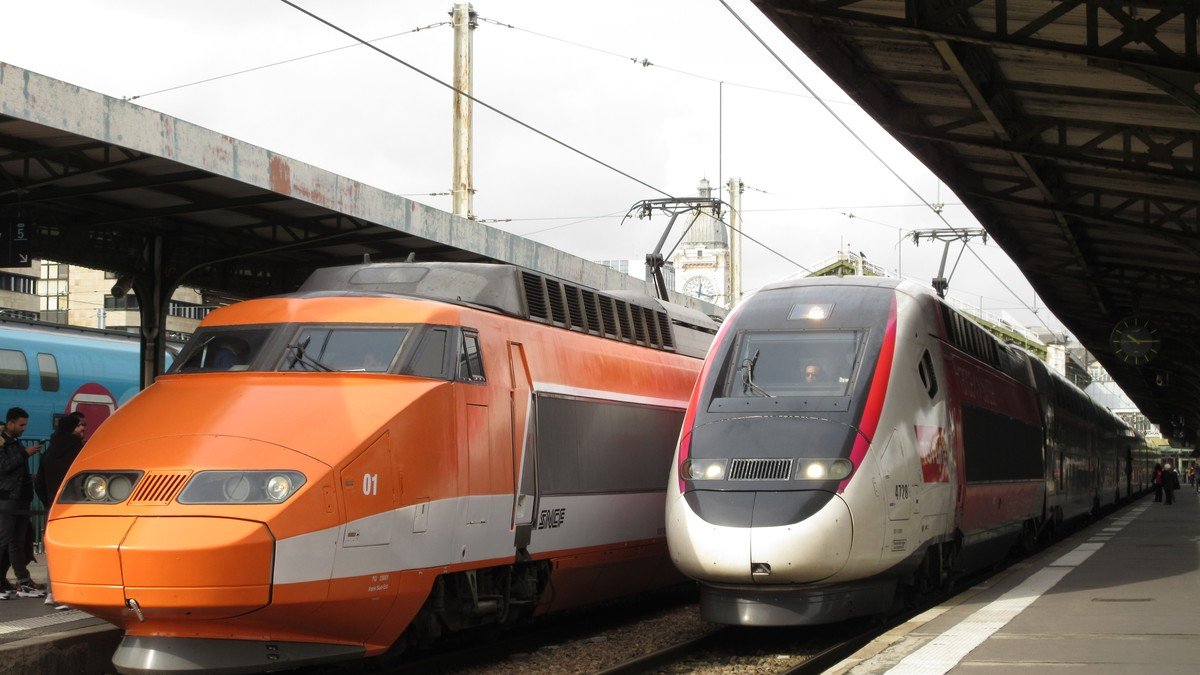
French national rail operator SNCF Voyageurs and train manufacturer Alstom have accelerated the dynamic network testing phase for the TGV M, the fifth-generation high-speed train set to redefine long-distance European rail travel over the coming decades.
Test trainsets, branded commercially as the Avelia Horizon, have been conducting rigorous daytime and nocturnal trial runs at speeds up to 320 km/h (200 mph) along the LGV Sud-Est high-speed line and conventional track sections across central and southern France.
Aerodynamic Innovation and 20% Energy Efficiency
Engineers from SNCF and Alstom are fine-tuning critical operational subsystems, evaluating pantograph aerodynamics under overhead catenary wires, testing regenerative braking systems, and verifying electromagnetic compatibility with French and European signaling protocols.
Featuring an elongated, aerodynamic nose cone, the TGV M achieves a 20% reduction in energy consumption compared to current duplex trainsets, while constructed from 97% recyclable components and utilizing regenerative braking that returns power to the national grid during deceleration.
“The TGV M is not merely a faster train; it is an ecological and industrial revolution. It delivers more comfort, unmatched accessibility, and superior energy efficiency for our passengers.”
Enhanced Passenger Capacity and Pan-European Readiness
Passenger capacity has been expanded by 20%, allowing each nine-car trainset to accommodate up to 740 seated travelers, with modular interiors that can be rapidly reconfigured from first-class to second-class layouts to match seasonal travel spikes.
With 115 trainsets ordered under a €2.7 billion contract, SNCF aims to inaugurate passenger revenue service in late 2025 and early 2026 on the flagship Paris-Lyon-Marseille corridor, followed by cross-border routes into Italy, Spain, and Switzerland.
Comments (0)
Log in to join the discussion.