

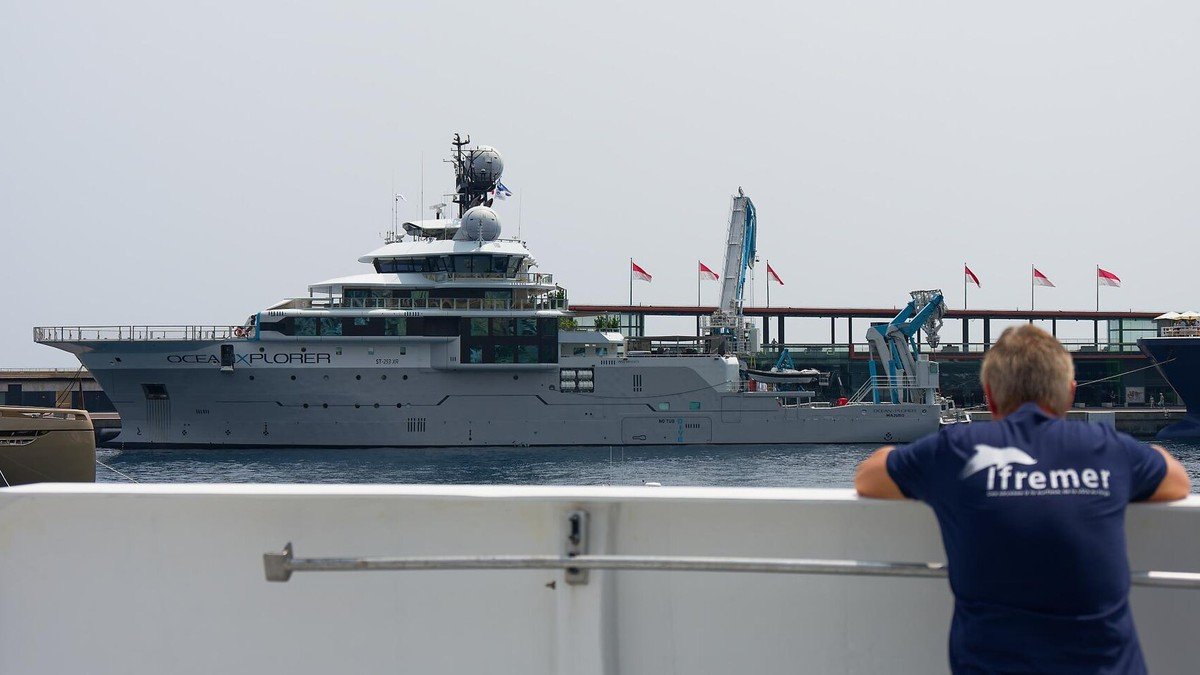
An international team of oceanographers and marine biologists aboard the Schmidt Ocean Institute's state-of-the-art research vessel Falkor (too) has announced the discovery of more than twenty suspected new deep-sea animal species along the submerged Nazca Ridge off the coast of Chile. Conducting high-resolution surveys across ten previously uncharted underwater seamounts, the expedition revealed thriving ecosystems in the oceanic abyss.
Utilizing the advanced 4,500-meter-rated remotely operated vehicle (ROV) SuBastian, researchers documented ancient deep-sea coral gardens, delicate glass sponge aggregations, and unusual cephalopods living in extreme depths. High-definition 4K video feeds beamed back from the seabed captured mesmerizing behavioral footage of organisms previously unknown to science.
Robotic Submersible Dives Reveal Untouched Abyssal Ecosystems
Among the most striking discoveries were pristine cold-water coral reefs dominated by bamboo and black corals that have grown undisturbed for thousands of years. Scientists also collected high-resolution imagery and specimen samples of bizarre benthic sea cucumbers, ghost-like deep-water crabs, and predatory polychaete worms specially adapted to abyssal pressures and near-freezing temperatures.
Co-led by researchers from Chile's Universidad Católica del Norte, the expedition mapped more than 22,000 square kilometers of seafloor topography. The acoustic multibeam bathymetry revealed that several seamounts rise thousands of meters above the abyssal plain without ever breaking the ocean surface, acting as isolated biodiversity islands.
“Exploring the uncharted seamounts of the Nazca Ridge uncovered breathtaking biological diversity, underscoring the urgent imperative to safeguard fragile deep-sea ecosystems from industrial exploitation.” — Dr. Javier Sellanes, Expedition Co-Lead and Marine Biologist at Universidad Católica del Norte
High-Seas Protection and the Fight Against Deep-Sea Mining
The biological data gathered during the expedition arrives at a critical juncture for international environmental law. Because the Nazca Ridge extends beyond national jurisdictions into international waters, the findings provide vital empirical evidence to designate the underwater mountain chain as an officially recognized high-seas marine protected area under the United Nations High Seas Treaty.
Conservation advocates stress that these delicate benthic communities face acute long-term vulnerabilities from experimental deep-seabed mining exploration and commercial bottom trawling. By documenting these virgin ecosystems before industrial exploitation begins, researchers hope to establish enforceable conservation protections for the Southeastern Pacific.
Frequently Asked Questions
Where is the Nazca Ridge located?
The Nazca Ridge is an extensive underwater mountain chain located off the coast of Chile and Peru in the Southeastern Pacific Ocean.
What research vessel was used for the deep-sea expedition?
The expedition was conducted aboard the Schmidt Ocean Institute's research vessel Falkor (too) using the ROV SuBastian.



Comments (0)
Log in to join the discussion.