

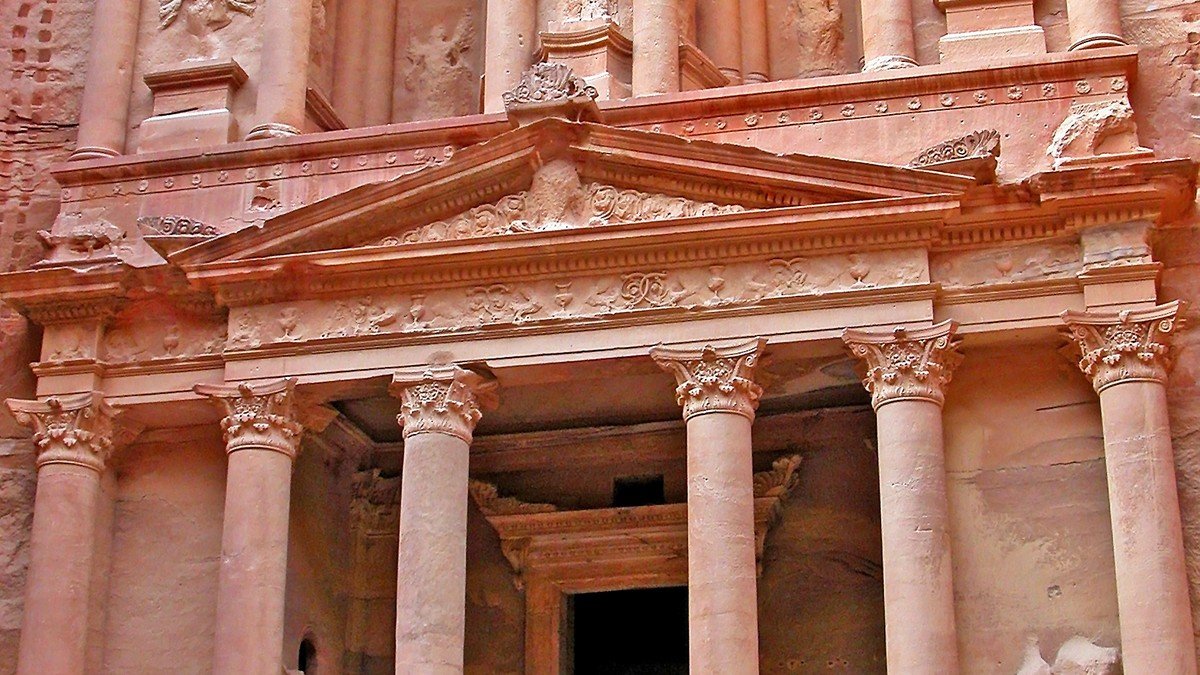
In what researchers are hailing as one of the most consequential archaeological breakthroughs in modern Middle Eastern history, a joint expedition has discovered an undisturbed 2,000-year-old burial tomb directly beneath the iconic Al-Khazneh (The Treasury) in Petra, Jordan. Led by Dr. Pearce Paul Creasman of the American Center of Research alongside Jordan's Department of Antiquities, the excavation uncovered twelve complete human skeletons accompanied by pristine burial offerings.
While Al-Khazneh attracts millions of international travelers each year and was famously featured in cinematic lore, its subterranean foundations remained largely unexplored due to conservation restrictions. The breakthrough came after the research team utilized ground-penetrating radar and electromagnetic conductivity surveys, identifying subsurface anomalies beneath the sandstone plaza fronting the monument.
Ground-Penetrating Radar Pinpoints Undisturbed Subterranean Chamber
Upon securing governmental excavation permits, archaeologists delicately excavated through compacted layers of desert sediment to reveal a stone-hewn mortuary vault that had remained sealed since the first century CE. Unlike previously documented tombs in Petra that were systematically looted over centuries, this chamber was found entirely intact.
The twelve interred skeletons were arranged alongside personal ornaments, iron weapons, and ornate bronze vessels. Most remarkably, one of the skeletons was discovered clutching an exquisite ceramic chalice whose distinctive silhouette bears an uncanny resemblance to popular artistic representations of the Holy Grail.
“This is a monumental archaeological discovery. Finding an intact tomb beneath one of the Seven Wonders of the World reveals Nabataean mortuary traditions preserved for two millennia.” — Dr. Pearce Paul Creasman, Executive Director of the American Center of Research
Grail-Like Ceramic Chalice and Insights into Nabataean Mortuary Rites
Bioarchaeologists plan to perform rigorous ancient DNA extraction, isotopic dietary reconstruction, and radiocarbon dating on the skeletal remains. These scientific analyses promise to shed unprecedented light on the genetic origins, health profiles, and social stratification of the Nabataean kingdom during its golden age as a trading empire.
Jordanian cultural authorities confirmed that the artifacts will undergo conservation treatment before being showcased in the Petra Museum. The monumental discovery demonstrates that even world-famous heritage sites still harbor profound ancient secrets awaiting sophisticated remote sensing technology.
Frequently Asked Questions
What was discovered beneath the Treasury at Petra?
Archaeologists discovered an intact 2,000-year-old tomb containing twelve complete human skeletons, ceremonial bronze artifacts, and a ceramic chalice.
Who led the archaeological excavation beneath Al-Khazneh?
The excavation was led by Dr. Pearce Paul Creasman of the American Center of Research alongside Jordan's Department of Antiquities.


Comments (0)
Log in to join the discussion.