

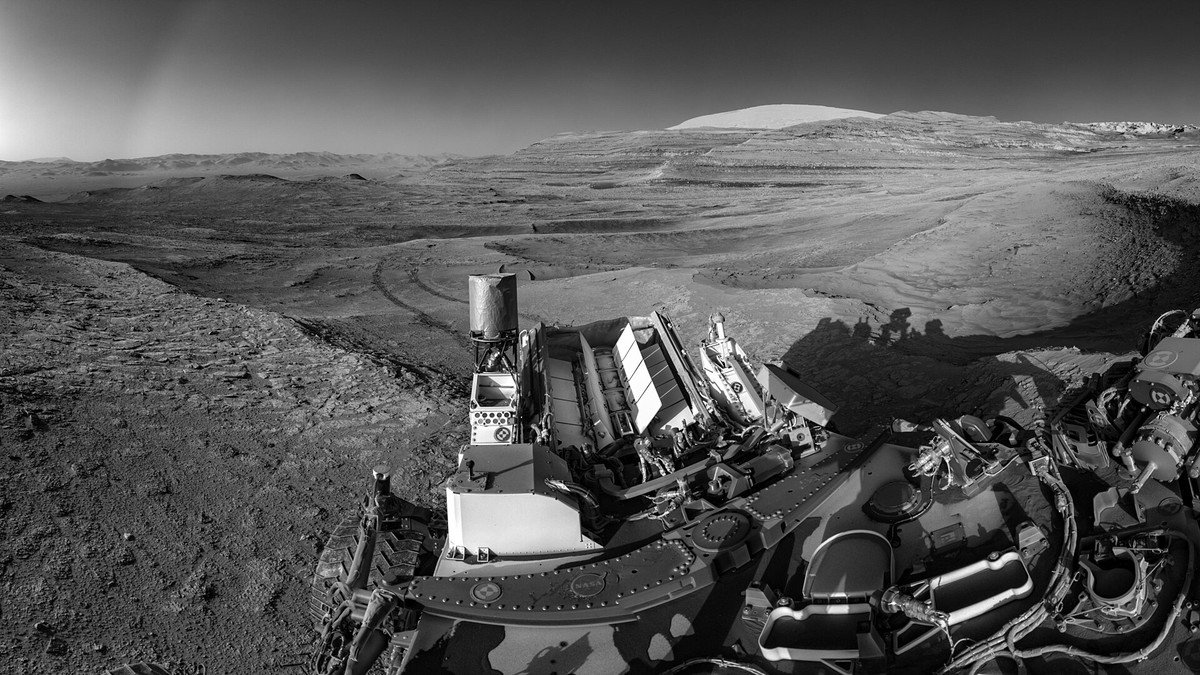
NASA's Curiosity Mars rover has made an astonishing geological discovery on the Red Planet after inadvertently driving over and cracking open a nondescript rock in the Gediz Vallis channel on Mount Sharp. When the rover's six metallic wheels crushed the fragile stone, onboard cameras captured a dazzling interior filled with glistening yellow crystals of pure elemental sulfur.
While Mars is abundant in sulfur-based compounds—primarily sulfates formed when ancient water evaporated—pure elemental sulfur has never before been observed on the Martian surface. The unexpected discovery has captivated planetary scientists at NASA's Jet Propulsion Laboratory (JPL), who had initially dismissed the area as an ordinary field of dark debris.
Accidental Discovery of Elemental Sulfur in Gediz Vallis
Curiosity used the Mars Hand Lens Imager (MAHLI) camera mounted at the end of its robotic arm to capture microscopic close-up images of the crystalline matrix. Subsequent spectroscopic readings confirmed that the yellowish minerals consisted of 100 percent elemental sulfur rather than conventional magnesium or calcium sulfate salts.
Intriguingly, the cracked rock was not an isolated anomaly. As mission operators panned the rover's Mastcam across Gediz Vallis, they realized the entire landscape was strewn with similar white-rimmed stones, indicating that Curiosity had unknowingly driven into a widespread field composed entirely of pure sulfur.
“Finding a field of stones made of pure sulfur is like finding an oasis in the desert. It shouldn't be there, so now we have to explain it. Discovering the strange and unexpected is what makes planetary exploration so exciting.” — Ashwin Vasavada, Curiosity Project Scientist at NASA's Jet Propulsion Laboratory
A Geochemical Mystery on the Slopes of Mount Sharp
On Earth, elemental sulfur forms under an extremely narrow spectrum of geochemical environments, typically associated with active volcanic fumaroles or intense hydrothermal hot springs. However, Mount Sharp is a sedimentary mountain formed by windblown dust and ancient lake beds, presenting no clear evidence of volcanic activity in the immediate vicinity.
The scientific team is now formulating new hypotheses to explain how massive quantities of pure sulfur precipitated in Gediz Vallis, suspecting complex interactions between subterranean groundwater, ancient debris flows, and sulfur-rich atmosphere. Curiosity will continue drilling adjacent stones to unlock the secrets of this Martian puzzle.
Frequently Asked Questions
What did the Curiosity rover find inside the crushed Martian rock?
The rover exposed shimmering, bright yellow crystals composed of 100 percent pure elemental sulfur.
Why is finding pure sulfur on Mars unexpected?
Pure elemental sulfur has never been seen on Mars and typically requires rare volcanic or hydrothermal conditions to form.


Comments (0)
Log in to join the discussion.