

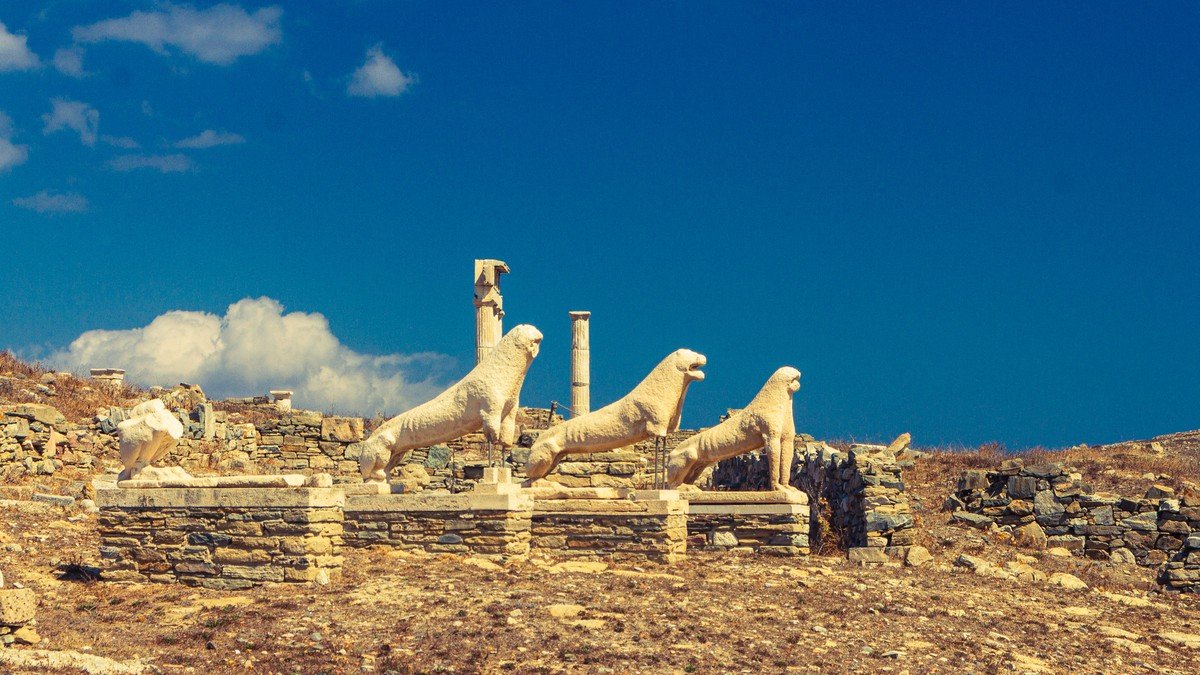
UNESCO and the Hellenic Ministry of Culture announced on September 23, 2026, the launch of a comprehensive €45 million emergency conservation initiative aimed at safeguarding the sacred Aegean island of Delos from accelerating climate change damage. Revered in classical antiquity as the mythological birthplace of Apollo and Artemis, the entire uninhabited Cycladic island—inscribed as a UNESCO World Heritage site since 1990—faces existential threats from rising sea levels, severe wave action, and chemical stone decay.
Over the past two decades, Mediterranean sea levels around the Cyclades have risen at an accelerated pace, inundating low-lying archaeological sectors including the ancient commercial port, the Stoa of Philip V, and the coastal Theatre Quarter. Heavy winter storms driven by changing meteorological patterns regularly breach historic sea walls, submerging delicate Hellenistic mosaic floors and marble colonnades under corrosive saltwater.
Combating Marine Submergence, Salt Crystallization, and Coastal Erosion
Beyond direct wave destruction, the sanctuary's porous local gneiss and granite foundations are disintegrating due to cyclic salt crystallization and extreme thermal variations. As seawater penetrates ancient masonry and evaporates in blistering summer heatwaves, expanding salt crystals fracture load-bearing stone walls from within, threatening the imminent collapse of structural monuments like the iconic Terrace of the Lions.
The preservation master plan, formulated in close partnership with the French School at Athens and the National Technical University of Athens, represents one of the most technologically ambitious heritage stabilization efforts ever mounted in the Mediterranean. Civil engineers will construct submerged, eco-engineered offshore breakwaters designed to dissipate 70% of destructive storm wave energy without altering coastal currents or disrupting marine flora.
“Delos is a unique treasure of human civilization that embodies the intellectual and spiritual foundations of the ancient world. We cannot allow rising seas to erase what three millennia of history have preserved. This master plan unites science, engineering, and cultural stewardship to protect Apollo's sanctuary for future generations.”
Deploying Advanced Geotechnical Armor and Digital Twin Laser Mapping
On land, conservation teams are deploying reversible nanotechnology-based consolidants and breathable hydraulic lime mortars to arrest the crumbling of stone friezes. Additionally, hydrologists will install subsurface drainage conduits and natural geotextile membranes to channel brackish groundwater away from the archaeological core into designated catchment reservoirs.
To oversee ongoing conservation efficacy, researchers have completed a millimeter-precise 3D digital twin of Delos utilizing terrestrial LiDAR scanners and drone-mounted multispectral photogrammetry. Embedded fiber-optic sensors and seismic accelerometers will feed structural deformation data into an AI monitoring hub, providing early warnings of subterranean shifting and enabling surgical structural interventions before irreversible damage occurs.
Comments (0)
Log in to join the discussion.