

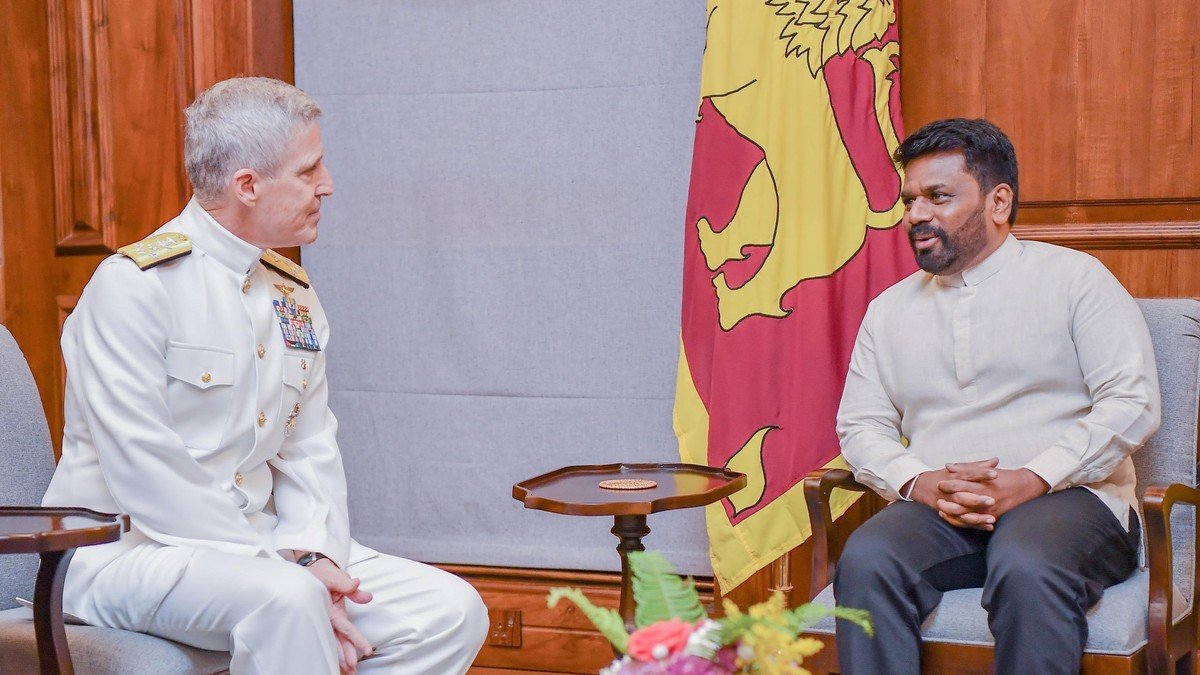
In a landmark political transition for Sri Lanka, President Anura Kumara Dissanayake swore in Dr. Harini Amarasuriya as the nation's 16th Prime Minister on September 24, 2026. The appointment marks the first time in twenty-four years that a woman has taken the helm of government in Colombo, signaling a transformative shift in the island nation's political landscape following Dissanayake's decisive victory in the presidential election.
The official swearing-in ceremony took place at the Presidential Secretariat in Colombo, where Dr. Amarasuriya formally assumed leadership of a lean interim cabinet. She becomes only the third woman in Sri Lanka's history to hold the prime ministerial office, following in the footsteps of Sirimavo Bandaranaike—who made global history as the world's first female prime minister in 1960 and last served in 2000—and her daughter, former President Chandrika Bandaranaike Kumaratunga. The ceremony was conducted with deliberate austerity, reflecting the new administration's pledge to dismantle political patronage and curtail public expenditures.
Historic Swearing-In and an Academic's Ascent to Governance
A widely respected academic, sociologist, and rights advocate, Dr. Amarasuriya brings an unconventional background to Temple Trees, the official prime ministerial residence. Prior to entering frontline politics as a National List Member of Parliament for the National People's Power (NPP) in 2020, she served as a senior lecturer in the Department of Social Studies at the Open University of Sri Lanka. Holding a doctorate in social anthropology from the University of Edinburgh, Amarasuriya has spent decades researching youth disenfranchisement, gender inequality, and state welfare, earning credibility among progressive civic movements and youth organizations.
Shortly after the swearing-in, President Dissanayake issued an extraordinary gazette dissolving the 225-member parliament and scheduling snap general elections for November 14, 2026. With the NPP alliance previously holding just three seats in the legislature, the dissolution was viewed as an essential constitutional step to secure a workable parliamentary majority. Candidate nominations will open in early October, setting off a high-stakes campaign to align legislative power with the presidency's ambitious reform manifesto.
“Our administration carries a profound responsibility to heal our economy, restore transparency, and build an inclusive governance model that reflects the democratic aspirations of every Sri Lankan.”
Parliamentary Dissolution, Snap Elections, and Economic Imperatives
The interim government faces immediate structural headwinds centered on Sri Lanka's ongoing economic stabilization following the devastating 2022 sovereign debt default. Prime Minister Amarasuriya and her economic team must navigate delicate review talks with the International Monetary Fund (IMF) over the $2.9 billion Extended Fund Facility, seeking fiscal adjustments to alleviate crushing cost-of-living burdens on low-income households without jeopardizing international debt restructuring agreements with official and commercial bondholders.
The announcement has generated cautious optimism domestically among civil society groups and international markets monitoring policy continuity. Regionally, congratulations poured in from New Delhi and neighboring South Asian capitals, as diplomats welcomed Colombo's orderly constitutional transition. As campaigning begins for November's polls, Amarasuriya's leadership provides the NPP with a credible, technocratic face poised to bridge grassroots activism and executive statecraft.

Comments (0)
Log in to join the discussion.