

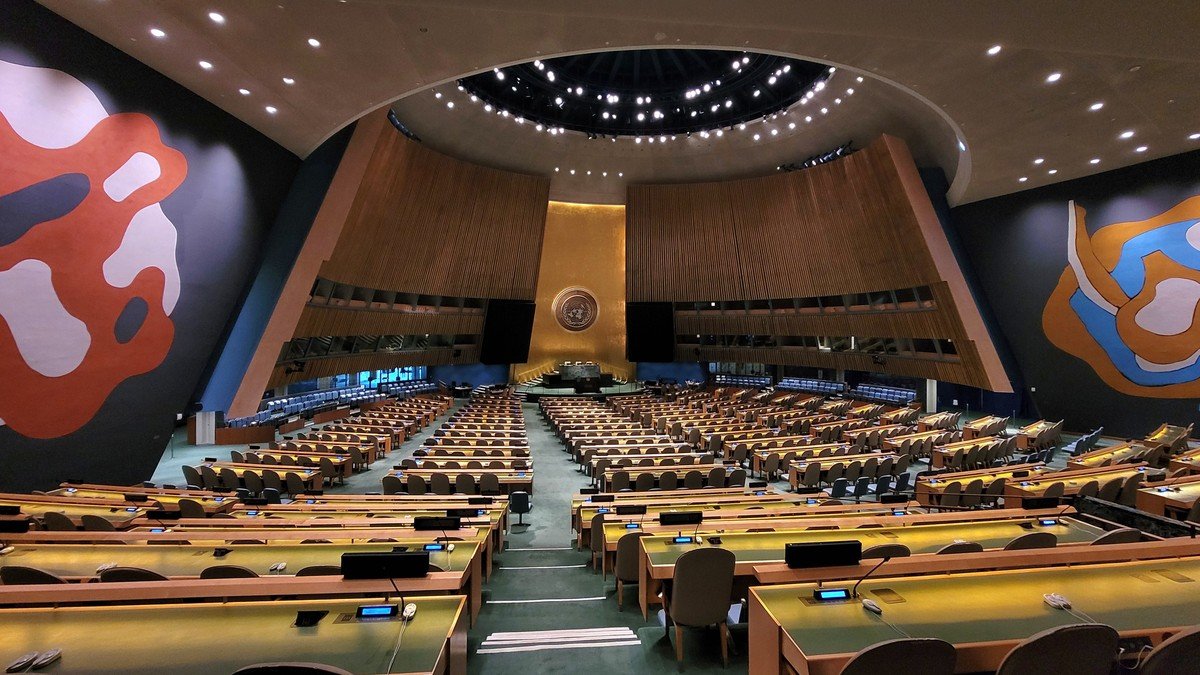
Addressing world leaders gathered at the United Nations General Assembly Hall in New York, Indian Prime Minister Narendra Modi delivered a resonant keynote address at the landmark Summit of the Future, asserting that the enduring success of humanity lies in collective cooperation rather than battlefield confrontation.
In a wide-ranging speech delivered before heads of state and international diplomats, Modi articulated the aspirations and security concerns of the Global South. He underscored that while emerging technologies offer transformative potential to eradicate poverty and accelerate sustainable development, they must be steered by ethical and inclusive international governance.
Ethical AI Governance and Digital Public Infrastructure as Global Goods
Central to the Prime Minister's address was a passionate call for human-centric regulation of artificial intelligence. Modi warned against the weaponization of technology and the emergence of severe digital divides, urging the global community to establish balanced regulatory frameworks that respect national sovereignty while fostering borderless innovation.
Highlighting India's proven track record in digital governance, Modi offered the nation's indigenous Digital Public Infrastructure (DPI)—including biometric identity system Aadhaar, instant payments rail Unified Payments Interface (UPI), and open digital health stacks—as open-access global public goods for developing countries.
“For safe and responsible use of technology, balanced regulation is needed. We want a global digital governance where national sovereignty and integrity are respected, ensuring that artificial intelligence remains strictly human-centric.”
Reforming Multilateral Institutions to Reflect 21st Century Realities
Turning to international architecture, Modi delivered an uncompromising critique of outdated multilateral institutions, declaring that comprehensive reform is the fundamental prerequisite for relevance. He argued that bodies conceived in the middle of the twentieth century, including the UN Security Council, must expand permanent representation to reflect contemporary geopolitical dynamics.
Modi welcomed the UN's adoption of the 'Pact for the Future', the Global Digital Compact, and the Declaration on Future Generations. International analysts observed that New Delhi successfully positioned itself as an indispensable bridge between developed nations and the developing world on critical questions of technology governance and international equity.
Comments (0)
Log in to join the discussion.