

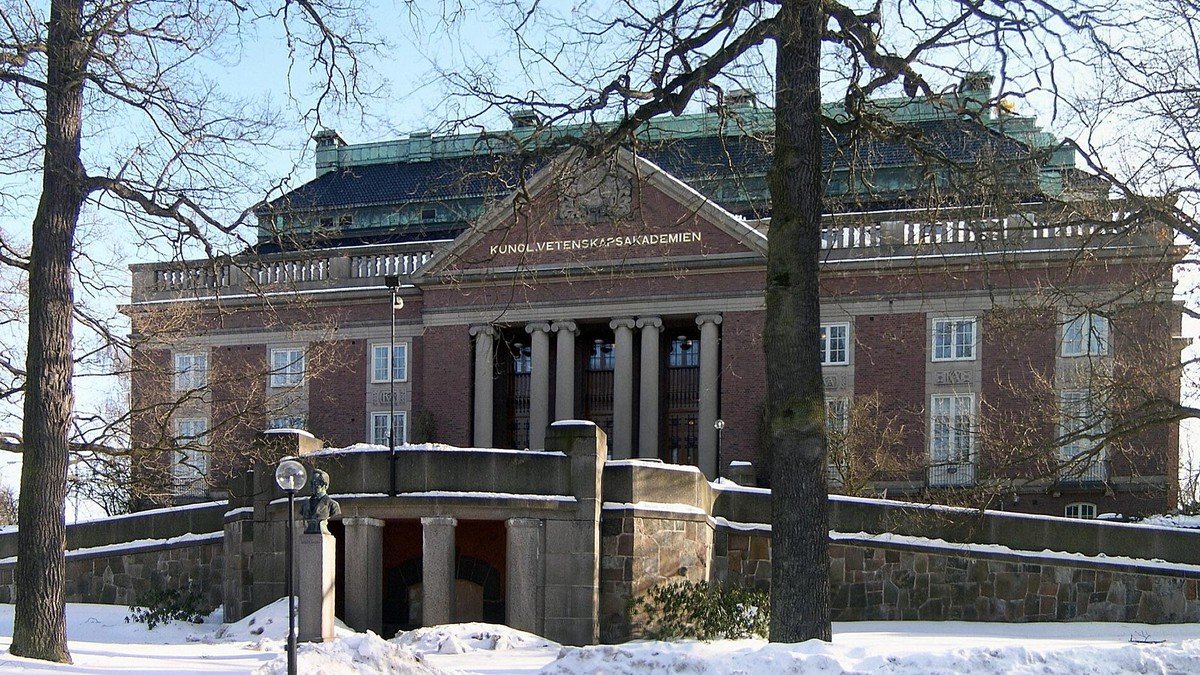
The Royal Swedish Academy of Sciences on Tuesday announced that the 2024 Nobel Prize in Physics has been awarded jointly to American scientist John J. Hopfield and British-Canadian researcher Geoffrey E. Hinton for foundational discoveries and inventions that enable machine learning with artificial neural networks.
Their revolutionary contributions bridged theoretical physics and computational science, demonstrating how physical equations governing atomic spin systems and statistical mechanics could be repurposed to build algorithms that store information and learn autonomously from vast data collections.
Harnessing Statistical Physics for Artificial Neural Networks
In 1982, John Hopfield developed an associative neural network that simulates how physical systems naturally settle into low-energy states. His network can store patterns—such as images or sound waveforms—and reconstruct them accurately even when presented with distorted, noisy, or incomplete inputs.
Building upon Hopfield's foundation, Geoffrey Hinton utilized statistical physics to devise the Boltzmann machine during the mid-1980s. This probabilistic network learns to recognize distinctive features in data, laying the algorithmic architecture that sparked the twenty-first-century revolution in generative AI and deep learning.
“The laureates used fundamental concepts from statistical physics to design artificial neural networks that function as associative memories and find patterns in large datasets.” — Ellen Moons, Chair of the Nobel Committee for Physics
From Hopfield Networks to Deep Learning Revolution
During the announcement ceremony in Stockholm, the Nobel Committee emphasized that machine learning models based on artificial neural networks have transformed research across materials science, particle physics, climate modeling, and astrophysics, becoming indispensable tools for contemporary scientific discovery.
Hopfield of Princeton University and Hinton of the University of Toronto will formally receive their diplomas, Nobel medals, and share an 11 million Swedish kronor prize at the traditional presentation banquet in Stockholm this December, sealing a historic milestone where computational intelligence met physics.
Frequently Asked Questions
Why did John Hopfield and Geoffrey Hinton receive the Nobel Prize in Physics?
They were recognized for foundational discoveries in statistical physics that enabled the creation and training of artificial neural networks for machine learning.
What is the difference between a Hopfield network and a Boltzmann machine?
A Hopfield network acts as associative memory that reconstructs patterns from noisy inputs, while a Boltzmann machine uses statistical mechanics to learn features autonomously.
Comments (0)
Log in to join the discussion.