

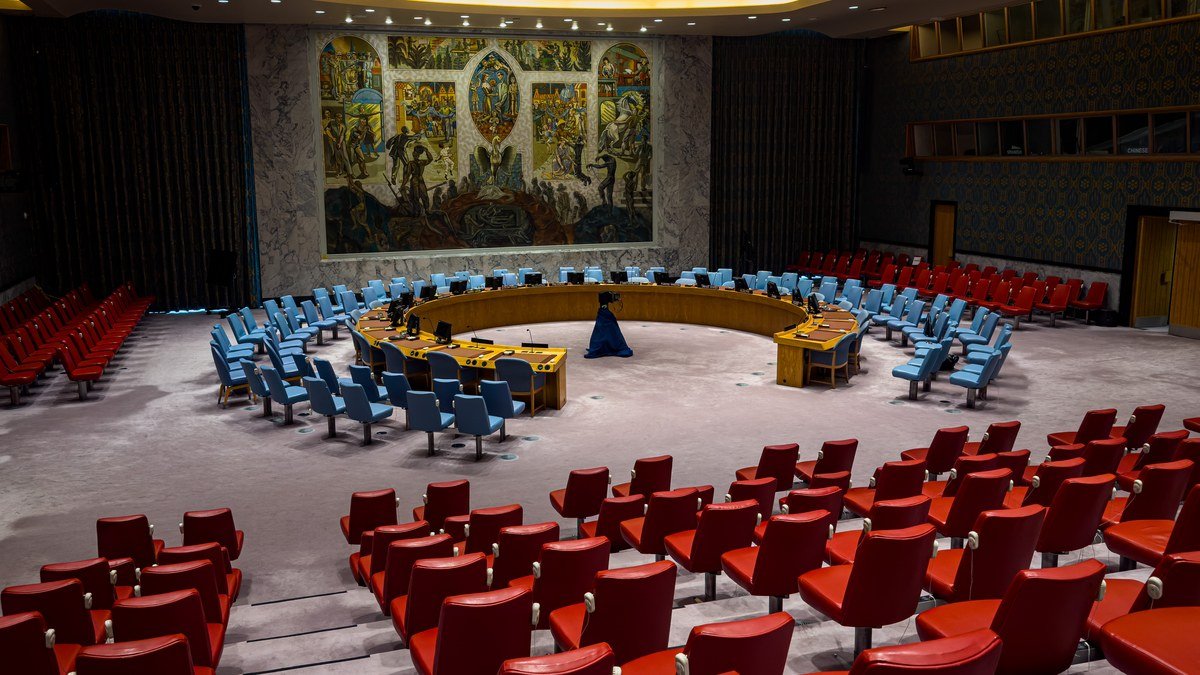
Indian External Affairs Minister Dr. S. Jaishankar met with Brazilian Foreign Minister Mauro Vieira, German Federal Foreign Minister Annalena Baerbock, and Japanese Foreign Minister Yoko Kamikawa in New York on the sidelines of the 79th session of the United Nations General Assembly (UNGA 79). Convening for the annual G4 Ministerial Meeting, the four senior diplomats issued a comprehensive joint press statement calling for urgent structural reform of the United Nations Security Council (UNSC) ahead of the organization's 80th anniversary milestone.
During the high-level deliberations, the four ministers assessed the deteriorating global security landscape, noting that escalating armed conflicts, humanitarian emergencies, and supply-chain disruptions have exposed severe institutional bottlenecks within the current fifteen-member Council. The quartet reiterated their shared commitment to supporting each other's candidacies for permanent membership in a reformed and expanded Security Council capable of enforcing international peace.
Pushing for Time-Bound Text-Based Negotiations at the UN
Central to the G4 ministerial declaration was a unified call to transition the long-running Intergovernmental Negotiations (IGN) process into concrete, text-based negotiations with clear timelines. For more than fifteen years, UNSC reform discussions within the General Assembly have proceeded without a consolidated single negotiating text, a procedural hurdle that the G4 ministers argued has allowed a small minority of states to stall consensus.
Building on the momentum of the Pact for the Future adopted during the Summit of the Future in New York, Jaishankar and his counterparts emphasized that reform cannot be restricted solely to non-permanent seats. The ministers asserted that only an expansion of both permanent and non-permanent categories can restore the legitimacy, representativeness, and operational effectiveness of the UN's premier decision-making organ.
“The G4 nations reiterate that comprehensive reform of the UN Security Council, with an expansion of both permanent and non-permanent categories, is indispensable to address today's complex global crises.”
Championing Global South and African Representation
The G4 declaration also placed strong emphasis on rectifying historical injustices against underrepresented regions, particularly Africa, as well as Latin America, the Caribbean, and the Asia-Pacific. The four ministers reaffirmed their staunch backing for the Common African Position, as articulated in the Ezulwini Consensus and the Sirte Declaration, which demands permanent African seats on the Security Council.
Furthermore, the quartet pledged to intensify diplomatic outreach across cross-regional coalitions, including the L.69 Group of developing nations and the C-10 African Union committee, throughout the 79th General Assembly session. As the United Nations approaches its octogenarian year in 2025, the G4 ministers warned that failing to modernize the post-1945 governance architecture risks eroding faith in multilateralism worldwide.


Comments (0)
Log in to join the discussion.