

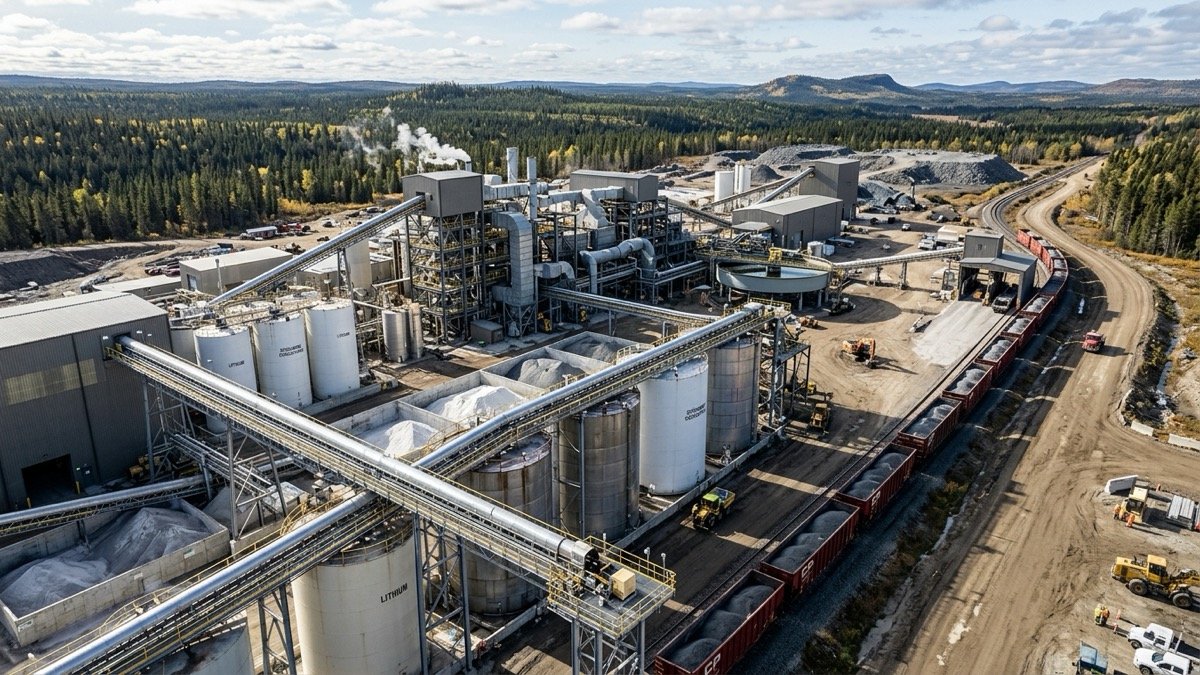
The European Union and the Government of Canada officially signed a comprehensive Strategic Partnership on Critical Raw Materials and Clean Energy Resilience in Brussels today. The landmark transatlantic pact establishes reciprocal trade guarantees, joint exploration funding, and simplified regulatory approvals for the extraction, processing, and recycling of vital industrial minerals.
The agreement directly addresses long-standing vulnerabilities in Western industrial supply chains, providing European automotive and renewable energy manufacturers with guaranteed access to Canada's rich deposits of lithium, nickel, cobalt, copper, and heavy rare earth elements required for electric vehicle batteries and wind turbines.
Mobilizing €1.5 Billion in Joint Transatlantic Financing
Under the terms of the treaty, the European Investment Bank (EIB) and Export Development Canada (EDC) will pool financial resources to establish a €1.5 billion credit and equity guarantee envelope. The facility will co-finance sustainable mining and hydrometallurgical refining facilities in Quebec, Ontario, and the Northwest Territories, while supporting downstream processing clusters across France, Germany, and Sweden.
| Mineral Group | Primary Application | Canadian Mining Hubs | European Industrial Destination |
|---|---|---|---|
| Spodumene Lithium | EV Battery Cells & Grid Storage | James Bay (QC), Abitibi | Northvolt, ACC Gigafactories (FR, DE) |
| Class-1 Battery Nickel | Cathode Chemistry & Aerospace | Sudbury (ON), Voisey's Bay | BASF Harjavalta, Umicore Nysa |
| Cobalt & Rare Earths | Permanent Magnets & Defense Avionics | Nechalacho (NWT), Cobalt (ON) | Siemens Gamesa, Airbus Defence |
| Clean Green Hydrogen | Zero-Carbon Steel & Chemicals | Newfoundland, Nova Scotia | Rotterdam Port, Ruhr Industrial Valley |
High Environmental and Traceability Standards
Unlike standard commodity trade pacts, the bilateral accord institutes a digital battery passport and verifiable traceability standard from pit to product. Minerals exported under this agreement must demonstrate full compliance with Indigenous community consent frameworks in Canada and strict environmental ESG benchmarks established under the European Union Critical Raw Materials Act.
“Canada and Europe are demonstrating that democratic allies can build secure, transparent, and environmentally responsible supply chains that protect our economies from weaponized trade monopolies.”
The agreement takes effect immediately, with initial shipments of Canadian refined spodumene lithium scheduled to reach European battery manufacturing facilities by the second quarter of 2027.


Comments (0)
Log in to join the discussion.