

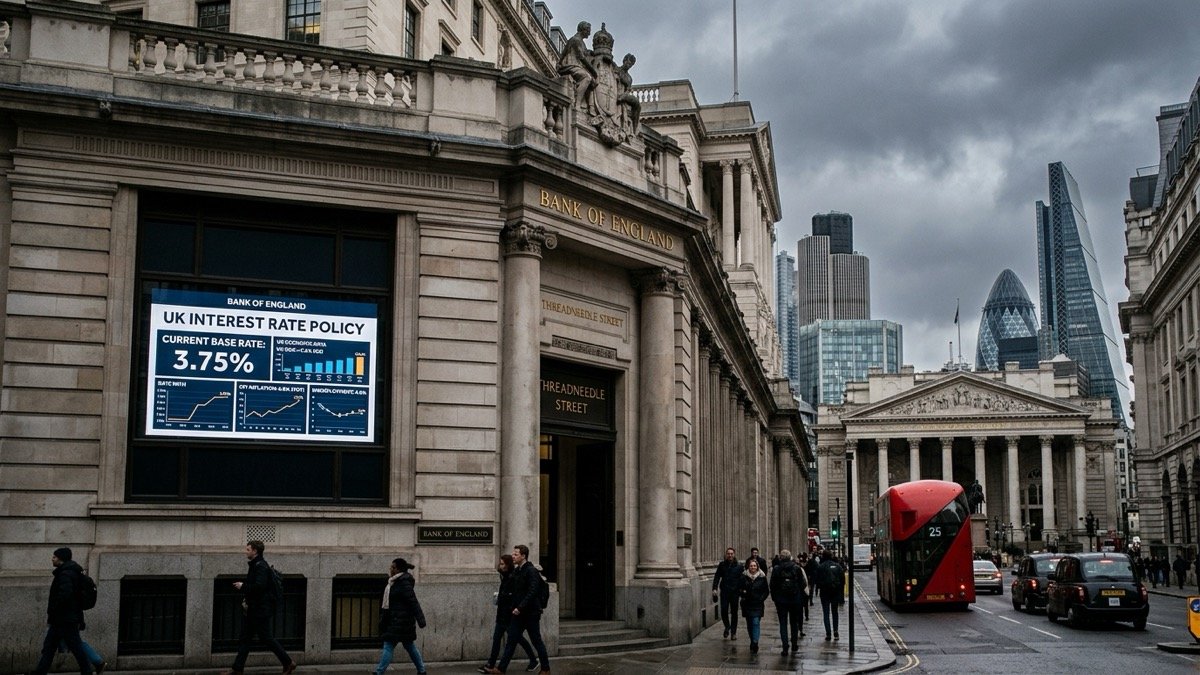
The Bank of England's Monetary Policy Committee (MPC) voted 7–2 today to keep the official Bank Rate unchanged at 3.75 percent, resisting calls for further borrowing cost relief following an unexpected rebound in domestic consumer prices. The verdict follows the release of August inflation figures from the Office for National Statistics, which revealed that headline inflation climbed to 3.1 percent year-on-year, driven by volatile petroleum and aviation transport tariffs.
The majority of the committee concluded that while headline disinflation has advanced significantly over the past two years, domestic structural pressures—particularly in private services and collective wage bargaining—remain incompatible with a sustainable return to the 2.0 percent inflation mandate. Services consumer inflation registered at 4.8 percent in August, demonstrating an enduring stickiness that central bankers cautioned could easily become embedded in long-term household expectations.
MPC Deliberation and the Split Decision
The vote split reflected deep divisions among policymakers over the trajectory of the British economy. Seven members, including Governor Andrew Bailey and Chief Economist Huw Pill, supported maintaining rates at 3.75 percent to guarantee disinflationary discipline. In contrast, two external members favored an immediate 25-basis-point trim to 3.50 percent, pointing to decelerating gross domestic product growth and weakening hiring activity across industrial sectors.
| Economic Indicator | Current Level | Previous Policy Meet | Central Bank Target |
|---|---|---|---|
| Benchmark Bank Rate | 3.75% | 3.75% | Neutral estimate: 2.75%–3.25% |
| Headline CPI (YoY) | 3.1% | 2.9% | 2.0% official target |
| Services CPI (YoY) | 4.8% | 4.9% | Sub-3.5% indicative threshold |
| Regular Wage Growth (Ex-Bonuses) | 4.5% | 4.7% | Consistent with 3.0% wage drift |
| Committee Vote Breakdown | 7 Hold / 2 Cut | 6 Hold / 3 Cut | Consensus governance |
Market Impact on Gilts and Sterling
Sterling appreciated 0.4 percent against the U.S. dollar following the announcement, trading near $1.3280 as currency traders adjusted expectations for autumn rate adjustments. The yield on the benchmark 10-year UK gilt edged higher by four basis points to 4.12 percent, indicating that market participants have delayed their anticipated date for the next rate reduction toward December 2026 or early 2027.
Commercial mortgage lenders are expected to maintain current fixed-rate pricing structures in response to the pause. While the standard variable rate remains pegged to the Bank Rate, swap rates that dictate two- and five-year fixed residential products had already priced in a high probability of today's hold, sparing mortgage holders immediate repricing shocks.
Outlook for the November Monetary Policy Report
Governor Andrew Bailey reiterated during the post-decision press briefing that future rate cuts would remain strictly dependent on incoming hard data rather than forward guidance formulas. The MPC is slated to deliver a comprehensive reassessment of its medium-term growth and inflation forecasts in the upcoming November Monetary Policy Report, which will also evaluate the fiscal implications of the Chancellor's forthcoming autumn budget.


Comments (0)
Log in to join the discussion.