

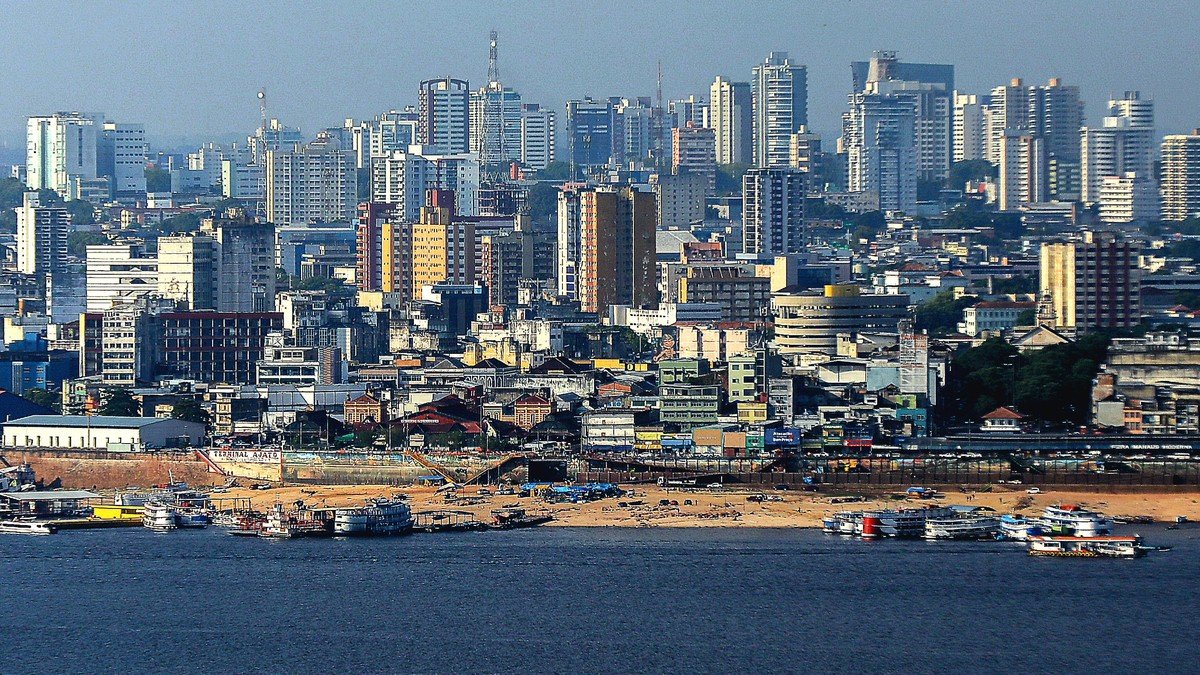
The environmental crisis gripping South America intensified dramatically this week as the Geological Survey of Brazil (SGB) confirmed that the Rio Negro at the Port of Manaus dropped below the critical 14-meter mark. The historic decline comes amid the most severe, prolonged drought ever documented across the Amazon basin, crippling river transport, stranding industrial cargo, and severing basic supply lines for hundreds of thousands of people.
Hydrological monitoring stations recorded the river level falling at an alarming rate of up to 25 centimeters per day. With water levels approaching the absolute record low of 12.70 meters set during the disastrous 2023 dry season, maritime authorities have imposed strict draft limits, preventing commercial container ships and grain barges from accessing the Manaus Free Trade Zone.
Paralyzed Waterways and Isolated Riverine Communities
The government of Amazonas state has declared all 62 of its municipalities in a state of environmental emergency. More than 330,000 residents across traditional ribeirinho (riverine) and Indigenous settlements have been left completely isolated, as tributary rivers and connecting creeks have transformed into impassable mud tracks and vast sandbanks.
Humanitarian relief teams from the Brazilian Civil Defense and Armed Forces have mobilized shallow-draft speedboats and military transport planes to deliver emergency rations, water purification kits, and medicines. In many remote communities, children and elderly residents must trek miles across baking sandbars under scorching 40°C heat to reach potable water distribution points.
“This is the most severe and widespread drought recorded in the modern history of the Amazon basin. River ecosystems and hundreds of riverine communities are facing unprecedented crises.”
Ecological Devastation and Emergency Relief Operations
The ecological fallout is equally devastating. Water temperatures in shallow oxbow lakes and lagoons have spiked beyond 38°C, triggering massive die-offs of fish and raising alarm over vulnerable aquatic mammals, including endangered Amazon pink river dolphins (boto-cor-de-rosa). Marine biologists and environmental rangers are patrolling desiccated channels to rescue trapped specimens.
Climate scientists attribute the compounding crisis to a toxic convergence of back-to-back El Niño weather cycles, abnormally warm tropical North Atlantic sea surface temperatures, and relentless deforestation. With the rainy season not anticipated until late November, authorities warn that the Amazon faces weeks of worsening ecological and economic hardship.
Comments (0)
Log in to join the discussion.