

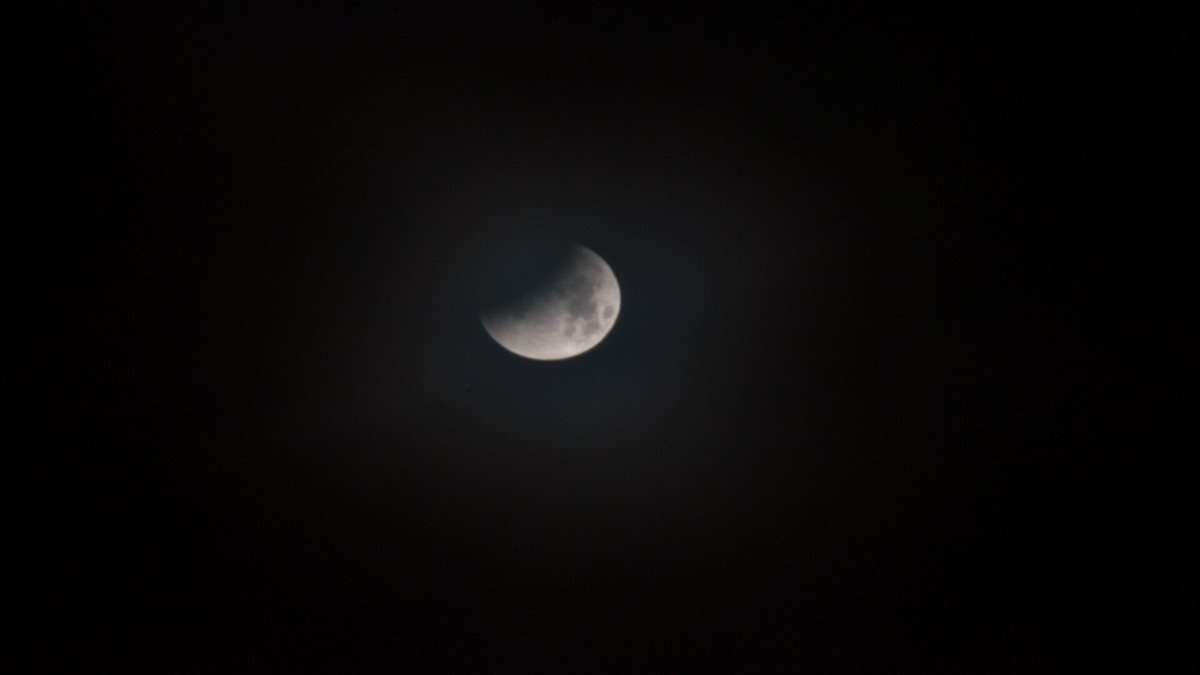
Skywatchers and stargazers across North America, South America, Europe, and western Africa were treated to an extraordinary celestial display on the night of September 17 to 18 as a brilliant Harvest Supermoon coincided with a partial lunar eclipse.
The simultaneous occurrence of a perigee full moon and an orbital shadow alignment created dramatic visual conditions that drew millions of observers outdoors and through observatories worldwide.
Orbital Perigee Meets Planetary Shadow
A supermoon occurs when a full moon coincides with perigee—the closest point in the moon's elliptical orbit to Earth. During this event, the moon was situated approximately 222,000 miles (357,000 kilometers) from Earth, causing it to appear roughly 8 percent larger in apparent diameter and up to 15 percent brighter than an average full moon.
The partial lunar eclipse unfolded in distinct phases over several hours. While penumbral shading created a soft dimming across the northern lunar surface, the peak event occurred when the moon grazed Earth's dark central umbral shadow.
“Having a supermoon and a lunar eclipse happen at the same time is a poetic cosmic reminder of our orbital dance.”
Safe Global Skywatching Without Telescopes
At maximum eclipse, approximately 8 percent of the moon's upper limb was immersed in darkness, resembling a crisp cosmic bite taken out of the luminous orb.
Astronomers emphasized that unlike solar eclipses, lunar eclipses are completely safe to view directly with the naked eye, binoculars, or backyard telescopes.
Comments (0)
Log in to join the discussion.