

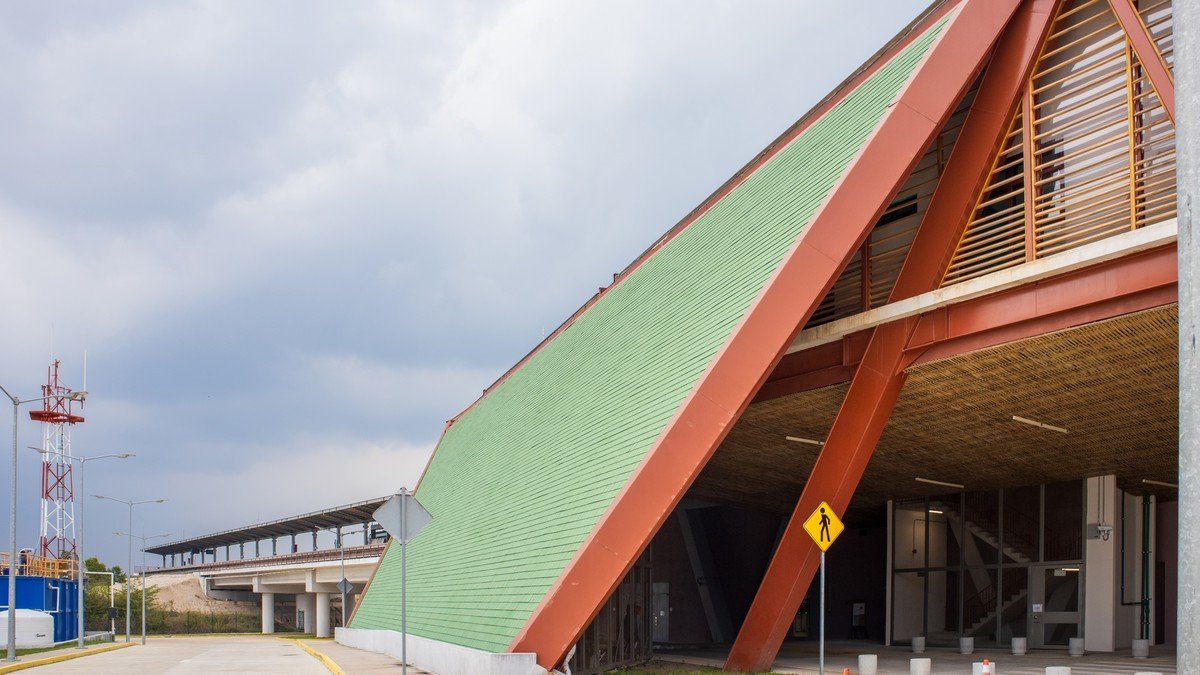
In an emotional and historic ceremony held in the state capital of Chetumal, Quintana Roo, outgoing Mexican President Andrés Manuel López Obrador and President-elect Claudia Sheinbaum formally inaugurated Sections 6 and 7 of the Tren Maya. The ribbon-cutting ceremony marked the official completion and seamless operational connectivity of the ambitious 1,554-kilometer railway network, fulfilling one of the central infrastructure commitments of the departing federal administration.
The newly opened stretches traverse southern Quintana Roo and Campeche, connecting major archaeological monuments, biosphere reserves, and urban centers including Tulum, Felipe Carrillo Puerto, Bacalar, and Calakmul. With the full circuit now connected, the train provides uninterrupted passenger and freight transport looping through Chiapas, Tabasco, Campeche, Yucatan, and Quintana Roo.
Completing the Historic 1,554-Kilometer Southeastern Circuit
During her remarks at the Chetumal passenger terminal, President-elect Claudia Sheinbaum praised the engineering achievement and reaffirmed her incoming administration's pledge to continue expanding passenger rail across northern Mexico. She emphasized that the Tren Maya serves as a transformative catalyst for reducing regional inequality while showcasing the rich cultural patrimony of indigenous Mayan communities.
Engineers from the Mexican Secretariat of National Defense (SEDENA), who directed the construction of Sections 5, 6, and 7, highlighted the sophisticated viaduct structures and wildlife corridors built to protect delicate subterranean cenote networks and Jaguar conservation corridors throughout the Calakmul biosphere.
“The Tren Maya represents social justice, regional integration, and sustainable economic development for the Mexican southeast, built with pride and respect for our ancient heritage.”
Economic Integration and Environmental Stewardship Along the Route
Commercial passenger operations across the full loop will scale rapidly ahead of the winter holiday travel season, offering both premium tourist services and subsidized fares for local residents and daily commuters. Freight operations are scheduled to commence fully in early 2025, providing regional agricultural and industrial producers with direct access to Gulf and Caribbean maritime terminals.
The completion of the railway stands as a monumental physical legacy of López Obrador's presidency, creating an enduring transportation backbone designed to redistribute tourism wealth away from exclusive coastal resort enclaves into the historically underserved interior of southeastern Mexico.

Comments (0)
Log in to join the discussion.