

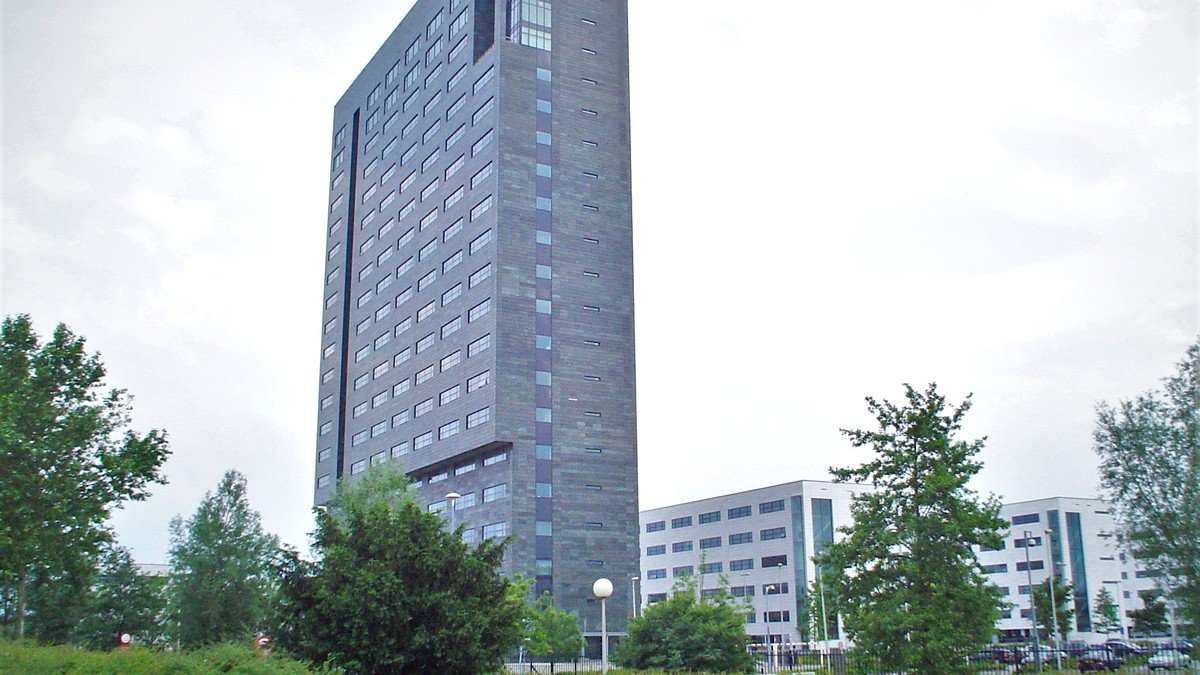
Dutch semiconductor manufacturing titan ASML Holding NV has officially confirmed the shipment of its second EXE:5000 High-NA EUV (Extreme Ultraviolet) lithography system to a leading global semiconductor manufacturer. The delivery of the 350-million-euro machine represents a monumental engineering milestone, providing leading-edge foundries with the physical tooling required to mass-produce sub-2-nanometer microchips for future artificial intelligence workloads.
The EXE:5000 platform features a revolutionary anamorphic optical architecture developed in conjunction with German optics pioneer Carl Zeiss. By increasing the numerical aperture from 0.33 in standard EUV scanners to 0.55, the system enables an unprecedented resolution capability down to 8 nanometers, allowing semiconductor architects to print significantly denser transistor features in a single exposure without resort to complex multi-patterning techniques.
Breaking the 2-Nanometer Frontier with 0.55 NA Optics
Leading semiconductor players, including Intel, TSMC, and Samsung Electronics, have engaged in fierce technological competition to integrate High-NA systems into their advanced research and pilot production fabs. The tool's shipment underscores escalating capital investment into specialized hardware required to sustain generative AI model development and advanced high-performance computing.
Logistically, transporting a single High-NA system represents an extraordinary feat, requiring more than 250 individual shipping crates, specialized climate-controlled containers, and four dedicated Boeing 747 cargo flights from ASML's cleanroom campus in Veldhoven, Netherlands.
“High-NA EUV is the cornerstone enabling the continuation of Moore's Law well into the next decade, providing our customers with the geometric scaling necessary for revolutionary AI architectures.”
The Geopolitical and Technological Nexus of Next-Gen AI Hardware
Market analysts emphasize that ASML maintains an absolute global monopoly over high-end commercial lithography tools, placing the Dutch company at the geopolitical apex of the global technology race. Western export controls continue to restrict the transfer of EUV technology to Chinese fabricators, heightening the strategic significance of each delivered tool.
With operational installation and optical calibration expected to take up to six months, the recipient foundry plans to leverage the EXE:5000 for advanced node validation throughout 2025, setting the stage for commercial production of next-generation AI processors by late 2026.

Comments (0)
Log in to join the discussion.