

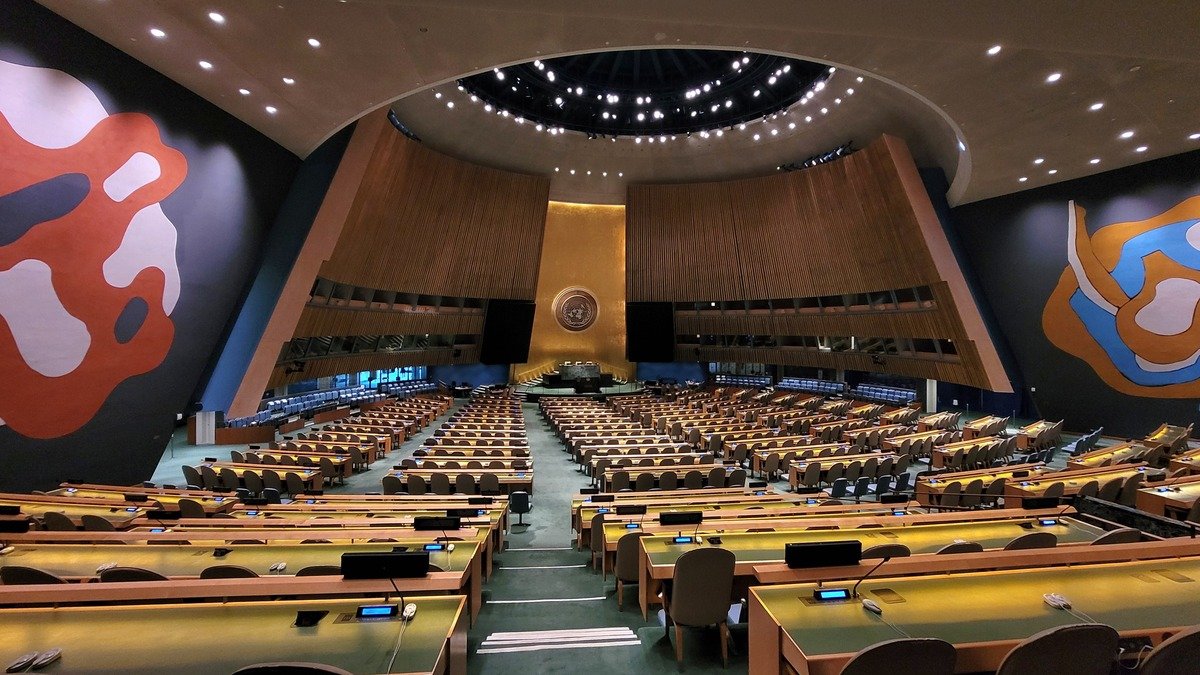
More than 130 heads of state and government converged on United Nations Headquarters in New York on Friday to participate in the landmark Summit of the Future. Convened ahead of the high-level general debate of the 79th UN General Assembly, the two-day summit seeks to rescue multilateralism from geopolitical paralysis and establish durable governance frameworks for emerging global challenges.
At the centerpiece of the gathering is the formal endorsement of the 'Pact for the Future,' an ambitious 56-action roadmap negotiated over nine months by co-facilitators Germany and Namibia. The document is accompanied by two binding annexes: the Global Digital Compact and the Declaration on Future Generations.
A Comprehensive Blueprint for Multilateral Renewal
UN Secretary-General António Guterres opened the proceedings with an urgent appeal to overcome acute geopolitical divisions, citing catastrophic conflicts in the Middle East, Ukraine, and Sudan, escalating climate instability, and the unregulated proliferation of disruptive technologies.
A critical breakthrough within the pact is the Global Digital Compact, which represents the first comprehensive multilateral consensus on artificial intelligence governance. The compact outlines the creation of an independent International Scientific Panel on AI modeled after the IPCC, alongside an annual global dialogue on digital public infrastructure.
“We cannot create a future fit for our grandchildren with a system built by our grandparents. The Summit of the Future is an unmissable opportunity to reshape multilateralism for the 21st century.”
Governing Artificial Intelligence and International Financial Reform
The pact also features strong language pledging to reform the 15-member UN Security Council to make it more representative, specifically addressing the historic underrepresentation of Africa. Furthermore, it urges structural modernization of international financial institutions, including the World Bank and International Monetary Fund, to expand affordable financing for developing nations.
Despite last-minute objections from a small coalition of states seeking to dilute oversight mechanisms, General Assembly President Philémon Yang confirmed that consensus had been achieved, setting the stage for formal adoption by the international community.

Comments (0)
Log in to join the discussion.