

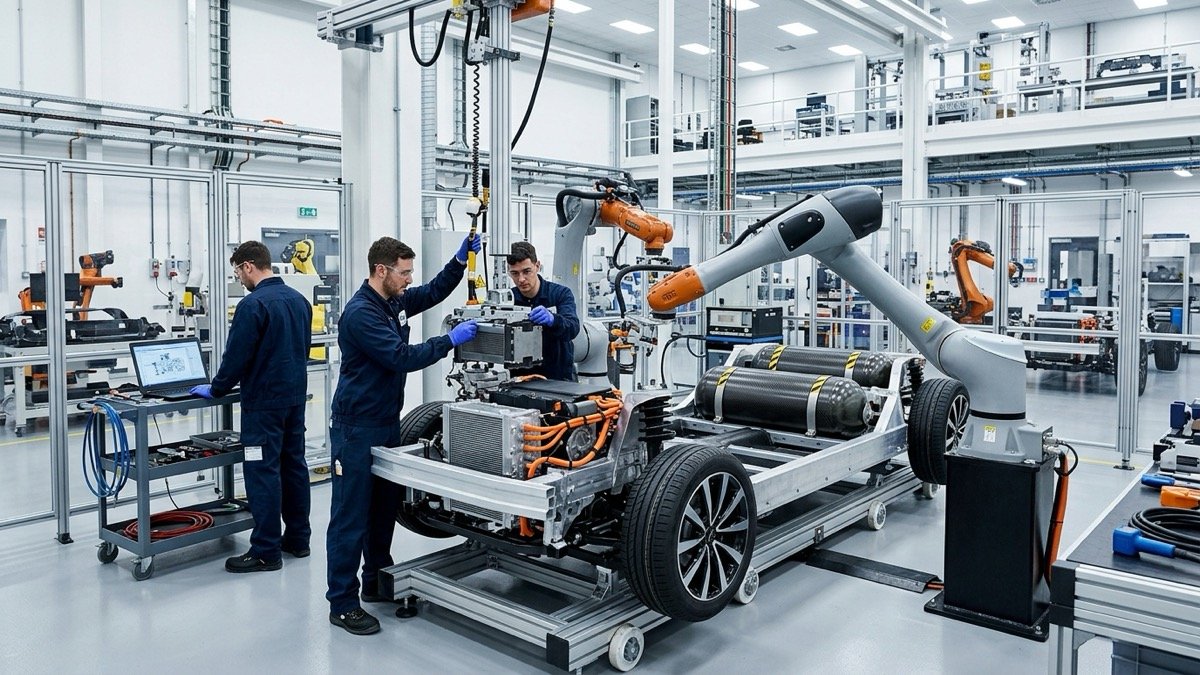
Automotive titans BMW Group and Toyota Motor Corporation today announced a major deepening of their technical partnership, establishing a joint development framework for third-generation hydrogen fuel cell systems. The strategic accord, signed simultaneously in Munich and Toyota City, commits both automakers to bringing cost-competitive zero-emission hydrogen passenger cars to global showrooms starting in 2028.
The alliance represents an assertive validation of hydrogen as an indispensable pillar of carbon-neutral mobility alongside battery-electric vehicles, particularly for long-range executive sedans, heavy SUVs, and commercial fleets requiring rapid three-minute refueling.
Shared Drivetrains to Slashing Production Costs
Under the agreement, engineers from both companies will co-develop standard core fuel cell components, including stacks, balance-of-plant systems, and lightweight carbon composite hydrogen storage tanks.
By pooling procurement volumes and standardizing production architectures, BMW and Toyota estimate they can slash fuel cell manufacturing costs by over 40%, overcoming the pricing hurdles that have historically slowed consumer adoption.
“This is a milestone in automotive history. Powered by hydrogen and driven by our joint engineering strength, this collaboration will usher in an era of commercially viable fuel cell mobility.”
Catalyzing Hydrogen Refueling Infrastructure
Recognizing that station availability remains the primary barrier to adoption, the two automakers announced a joint initiative with energy suppliers to build 700-bar commercial hydrogen corridors across Germany, France, Japan, and the United States.
BMW confirmed that its first full-production hydrogen vehicle will launch in 2028 as an integrated variant of its Neue Klasse architecture.

Comments (0)
Log in to join the discussion.