

Meesho sellers should calculate the full transaction cost rather than relying on a headline commission claim. Category charges, shipping, taxes, advertising, discounts, and return-related expenses can materially change net profit.
You want to use your ₹230 profit to buy momos and watch Netflix, but then Meesho's dashboard shows you their cut, and all of a sudden you're paying for their next investor yacht. Welcome to Meesho Commission Rates Explained: What Every Seller Needs to Know. This was written by a content gremlin who is on their fifth Red Bull and has lost more money to fees than to bad Tinder dates.
We're tearing down the "0% commission" lies because you deserve to know the whole truth if you're working hard from your one-room PG in Bangalore. No more guessing games—let's take this vampire apart before it drains the life out of your side-hustle dreams like a Starbucks line after the gym.
The Big Lie: "Low Commissions" or How Meesho Lies to You Every Day
To be honest, Meesho isn't a charity. They get a cut of each sale, which changes all the time, like TikTok trends do in 2025. The cut is between 5% and 15% on average.
If you don't pay attention to this, your "profits" are just participation trophies. Meesho Seller Guides love to brag about how "seller-friendly" their app is, but check out the fine print under "Pricing." It changes all the time depending on how quickly you sell, what deals you have going on, and how much the algorithm likes you that week.
Why keep it a secret like a bad ex's DMs? Being honest stops the hype machine. Some
people (very few) start at 0% and the base rate goes up to 18% for beauty. What about an update for 2025? More levels for "high achievers."
The Commission's Breakdown: Category Carnage and How It Affects Your Wallet
Jump into the empty space. Rates as of 2025 (check the app; they love surprises): Your no-nonsense cheat sheet for categories: Fashion (Sarees, Kurtas): 6%–12%. Selling for ₹350?
They get 21 to 42 rupees. Oh no. 10–18% for beauty and personal care.
Lipsticks? The thing that makes Meesho the most money. 4–8% for the kitchen and home.
Choppers are a win if they have a low cut and a lot of volume. Electronics and accessories: 5 to 10%. Phone cases are a sure thing.
8 to 14 percent of shoes. You will have to pay for juttis. If you stack them wrong, you'll eat your lunch 15% of the time.
To find the commission, multiply the rate by the order value (before any discounts). Are there any sales? You eat first, and then they cut the rest.
It feels like working from home because the boss gets credit (and a cut) while you work. You lose ₹50 if you order shoes for ₹500 and the rate is 10%. Put that on Stories?
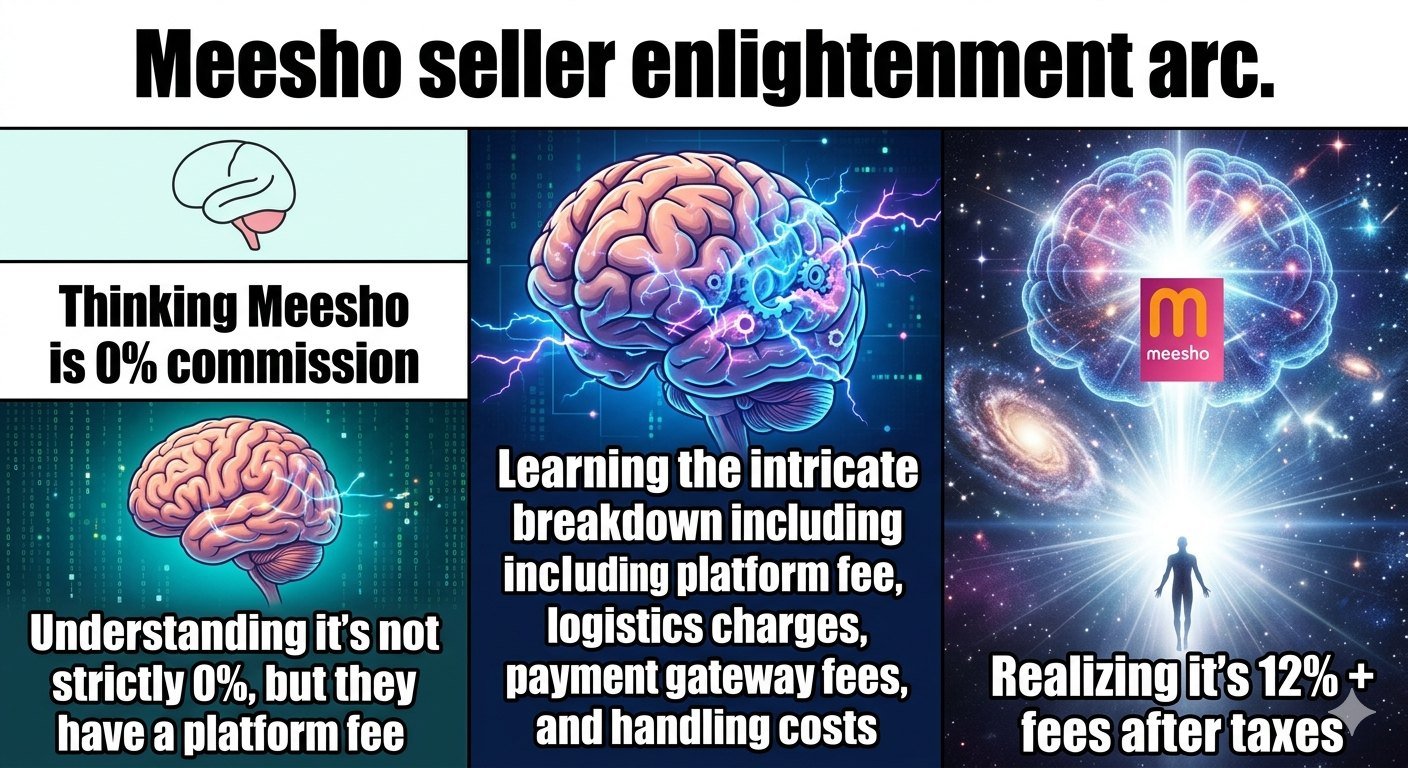
Crickets. Extra costs: The Real Thieves Behind the Meesho Heist The commissions are the main event, and the fees that steal the show are the opening act. Truth bomb: Your total deductions could go up to 25% if you're not careful.
Team that is sneaky: Shipping Subsidy: You pay ₹30 to ₹70 for each order that comes in and goes out. Payment Gateway: 2% for payouts. Cash on delivery (COD) fees range from 2% to 5% for cash kings, which make up 80% of India.
Return Shipping: You pay the full price for 10–20% of orders.
Did you sign up for the "Flash Sale" to get promo discounts? Your margin is going down. Meesho Seller Guides hide this in the FAQs, but when you add it all up, it's ₹350 for the fashion sale, ₹50 for shipping, ₹10 for PG, and ₹28 for COD.
That's a total of ₹88. A quarter of it went away. Like how you feel after ten hours of packing.
Have you ever thought about rhetorical rage since you got back? You didn't either. How to Stay Away from the Commission Guillotine (Fight Back, Peasant) Don't just complain; do something to fix things.
Seller power move: Go after categories that don't pay a commission, like groceries (new push for 2025). Things to do to get your rupees back: Kitchenware and books are in the "go low-cut" category, which means they are less than 5%. Volume Play: If you sell a lot, you can get lower rates (top sellers get 2–4%).
Pricing Pad: Add 20% to the price to cover fees. Don't sell for ₹350; sell for ₹420. Dropship Smart: You won't have to deal with returns if you don't have any inventory.
Analytics Dive: Click on "Earnings" on the dashboard and pick a category. Every week, things change.
Be like Ted Lasso and trust margins instead of Meesho's pep talks.
According to Meesho Seller Guides, ads can help boost sales (if the ROI is over 10%). If you spend ₹500 on ads and make ₹5,000 in sales with an 8% cut, you're doing well. Pro Tips for Growing Without Getting Stuck in Fees: Club with a Million Rupees?
You can get back input credits when you sign up for GST. Support for "power seller" status drops to 3–6%. In Sheets, keep track of: Column A: Sale Value B: Category Rate C: Total Deductions Less than 12% on average each month?
You're doing a great job. Last hack: List on Flipkart as well and compare prices across platforms. What is it about Meesho that makes it better?
No money up front, but fees are bad. Did you get through the Fee Fiesta? You are either a masochist or a future business leader.
You read the fine print without needing to see a therapist. Give yourself a pat on the back. Now use this as a weapon, stay away from those cuts, and maybe pay for my next IV of caffeine.
Did you succeed? No, just don't run out of cash. It's your turn, hustler.

Comments (0)
Log in to join the discussion.